
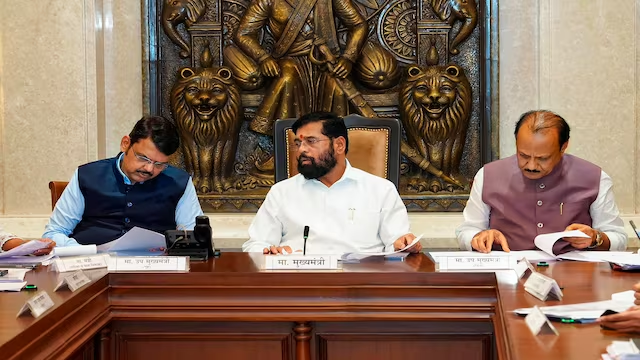
The Maharashtra Chief Minister Eknath Shinde has declared that light motor vehicles will no longer be charged at any of the five toll booths leading into Mumbai.
The waiver applies to toll booths at Dahisar, Mulund, Vashi, Airoli, and Tinhath Naka.
The decision, taken during the Maharashtra government’s final cabinet meeting before the upcoming Assembly elections, is set to take effect from midnight today.

This clearly is an effort to “bribe” the voters, but it could also be the beginning of the implementation of a more exhaustive GNSS.
The update now includes Global Navigation Satellite System (GNSS), on-board units for satellite-based tolling and Automatic Number Plate Recognition (ANPR) devices to read vehicle plates automatically.
Additionally, a new clause defines GNSS as a non-transferable device that must be securely fitted in each vehicle.
Another major change is the automation of the 20 km fee exemption. Previously, this exemption for local travel required manual applications and document submissions.
Under the new rules, the GNSS will automatically grant exemptions for travel up to 20 km per day, charging toll fees only for the distance travelled beyond this limit. This change simplifies exemption processes for users and establishes a legal framework for GNSS-based toll collection, marking a substantial shift from the 2008 rules towards more efficient and distance-based tolling systems.
The National Highways Authority of India (NHAI) is set to implement a new system allowing a 20 KM toll-free stretch on highways, leveraging the Global Navigation Satellite System (GNSS). Initially, this was aimed at commercial vehicles, presenting a significant shift in how toll collection is managed.
How will the Global Navigation System Work?
The GNSS will utilise on-board units (OBUs) installed in vehicles to track their movement. These units will enable real-time monitoring and computation of tolls based on the exact distance traveled rather than fixed toll points. The system aims to make toll collection more efficient and equitable.
For vehicle owners, particularly of commercial vehicles, using GNSS will involve installing an OBU in their car. This device will interact with satellites to track the vehicle’s journey and calculate tolls automatically. Initially, this service will be available only on specific dedicated lanes at toll plazas.
Applicability on private and government vehicles
As of now, the GNSS tolling system is exclusive to commercial vehicles, with private vehicles anticipated to join later. This phased approach ensures thorough testing and fixing of any operational issues before broader implementation.
It’s important to note that this facility will initially cover only around 2,000 KM by April-June 2025, expanding slowly. Therefore, immediate benefits might be limited, but the long-term potential is significant.
This enabling provision by NHAI marks the beginning of a more sophisticated tolling system, poised to revolutionise how we approach highway travel in India.
Under the new rules, the GNSS will automatically grant exemptions for travel up to 20 km per day, charging toll fees only for the distance travelled beyond this limit.
In Short
- GNSS and ANPR replace FASTag and manual methods
- 20 km fee exemption now automated via GNSS
- Toll based on distance, deducted automatically





 Love, power and a sound mind
Leave a comment