
Driving a car or two wheeler in Europe is indeed possible for the following Indian citizens. Read on to find out if you are eligible!
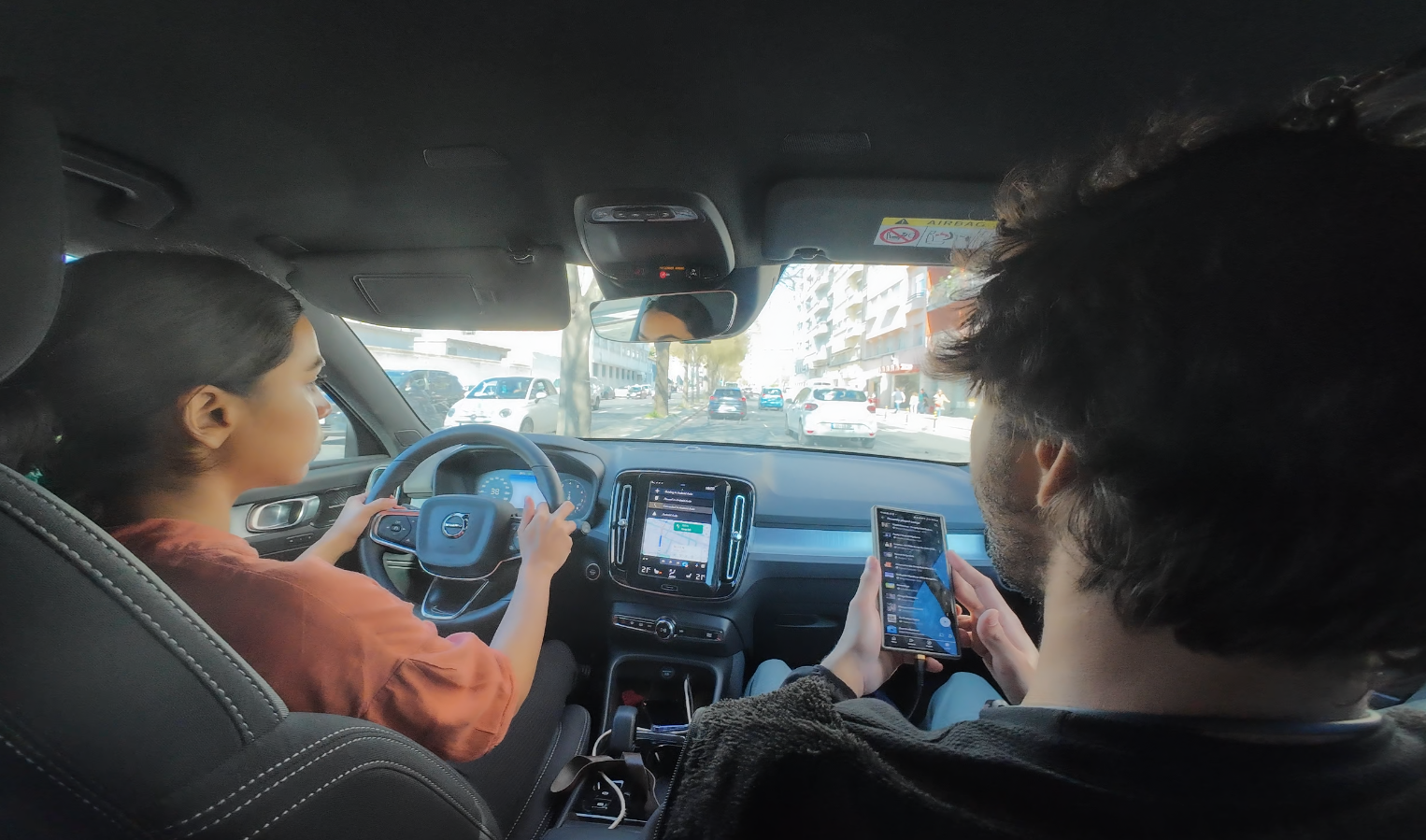
Here is my step by step guide after many years of driving cars in various parts of Europe like Germany, Austria, England, Scotland, and Portugal.
I am giving you tips and tricks from my latest self drive road trip, in March 2025.
We planned a family vacation in Portugal in South West Europe, after my youngest daughter completed her boards.
As we were five adults traveling together, we deliberated on the various modes of travel like train, bus, metro etc and finally decided to rent a car.
Here are some of the important points to remember.
Minimum/Maximum Age Limit
The minimum age for car hire is 19 years old.
There are higher rates applied to ages between 19-21 and / or 21-23 years old for all drivers who register on the rental agreement.
The maximum age is 90 years old.
Driving License
Drivers must hold a valid driving license for a minimum period of one year. If your driver’s license is not written in the Romanic alphabet ( Arabic, Greek, Russian, or Chinese) you should provide an international driver’s license as well as the national one.
International Driving Permit:
As an additional precaution, I got an IDP [International Driving Permit] which is valid for most countries valid for 3 years from here. I got the Softcopy within 10 minutes! Hard copy of the IDP and a Smart Card was couriered in India within 3 days. This is worth checking out if you wish to travel abroad and wish to drive around with your Indian driving license.

The other requirements are as follows:
International Credit Card
You need an International Credit Card for completing the transaction. The Credit card should be Mastercard or Visa, valid for international use.

Rupay cards will not work for this.
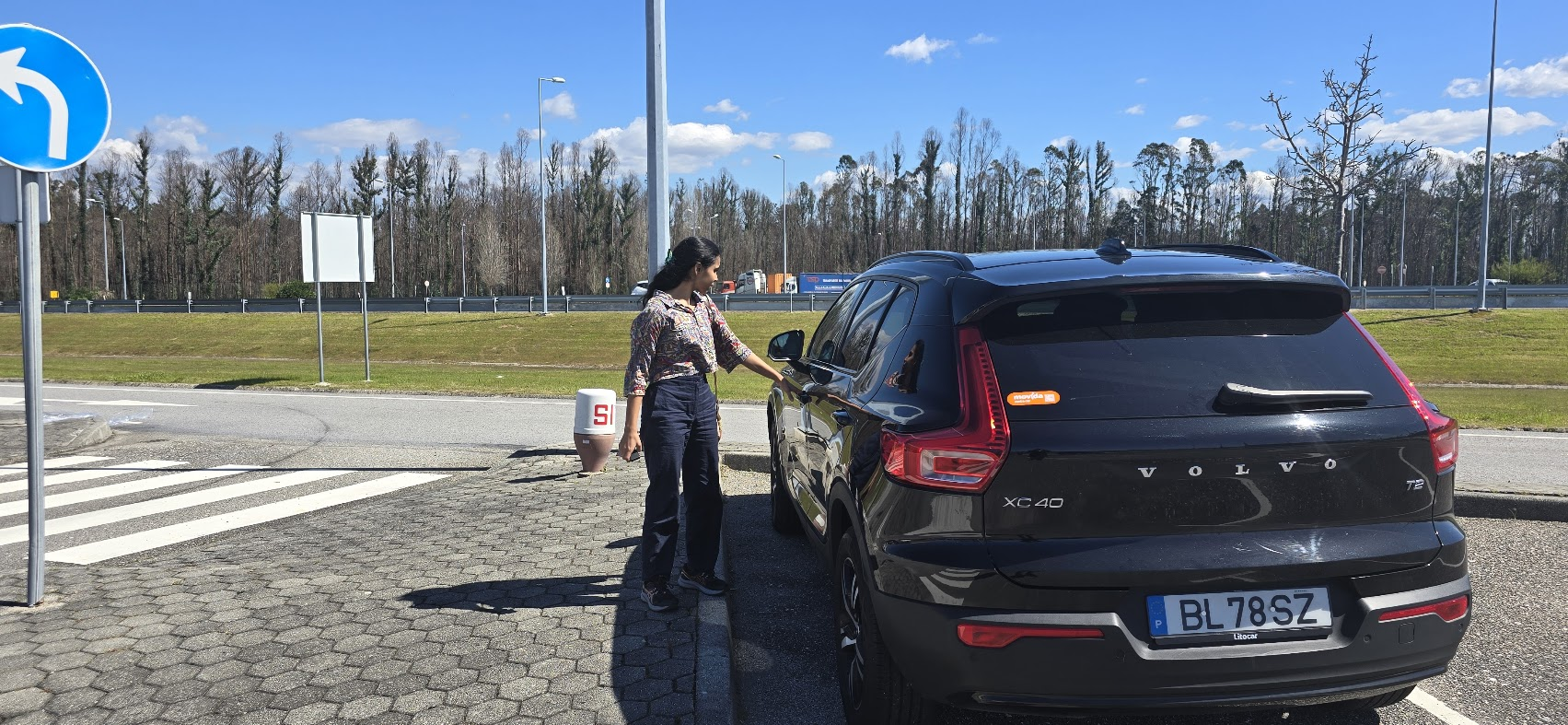
More importantly, the Credit limit should be adequate to cover the Security hold amount for the type of car you select. The excess amount varies considering the vehicle chosen. Values range between 1100 € and 7100 €. For example, we rented a mid size SUV which could take 5 big bags. We got a Volvo XC40. The amount that needed to be blocked on our card was 4600 € [Euros]. Also remember that this will reduce the available credit limit on the card.
Hence you also need to ensure adequate International transaction limits and have enough of credit limit to be able to spend, on your card. This is vital and if you don’t do this you will not be able to rent a car.
Selecting the best Car Rental Company:
When you search for the best car rental company, ensure you read the reviews and fine print as well, and don’t just go for the cheapest option. As we travelled by Emirates, they gave us a recommendation which proved to be very good. So we selected Drive on Holidays.
If you arrive by air to any airport in Europe, it is better or more convenient to pick up your rental car from the airport outlet. Usually the rental Companies have a van that picks up up from the airport and takes you to the company parking lot.

Some rental companies may have their cars parked at walking distance from the arrival terminal, but that may not be optimum if the weather is freezing and you have many bags to lug around.
At the counter where your documents are checked, add ons can be purchased.
Then you can go to the place where your car is parked, take pictures for your reference, check the interiors and get used to the car’s various features.

Then you can pack your luggage and drive off.
Whats included in your rental:
The rental includes CDW, THP, VAT, Airport fee and Unlimited Mileage. CDW
CDW insurance reduces the hirer’s liability for the full cost of the damage to a locally applicable excess, unless the hirer causes the damage intentionally, is under the influence of alcohol/drugs, or uses the vehicle in a prohibited or negligent manner, such as driving off the main roads, or lending the car to other drivers not included in the rental, or duly qualified. CDW insurance covers liability for damage to the vehicle as well as its parts and accessories. Windscreens, tyres, the underside of the car, loss of keys, towing fees and fines are not covered by the policy. Other exclusions may apply depending on the circumstances.
Theft Waiver
(TW) Reduces the contractor’s liability in the event of theft, damage caused by theft or attempted theft of the vehicle to an excess, where locally applicable. Negligence related to the theft of the vehicle may lead to the full cost of the vehicle being charged.
Add on comprehensive insurance cover gives you peace of mind and you need not purchase it from the same rental company. There are third party vendors who give you the same cover for a cheaper amount.
What is not included in the price?
Fuel, personal accident insurance, items awaiting special confirmation, insurance excess (unless specified on your voucher that this is already included), charges for out-of-hours pick-up, workshop, traffic and parking fines, congestion charges, additional drivers (unless otherwise stated on your voucher) and young drivers if applicable. All of these must be paid locally.
Add ons
There is the possibility to take out optional insurance to reduce or eliminate the contractor’s liability (excess). I took additional insurance at a much lower cost from here.
It is also possible to request an additional service for driving outside the country of origin of the car hire. Items and fees payable locally are subject to taxes.
You have 5 types of excess waiver coverages: Excess Reduction: Minimum of 7 days rental – Reduces the excess from 350,00€ to 3000,00€ (depending on the car group) in case of accident damages. Damages which do not result from an accident are not covered. This implies the provision of a police report.
Excess Cover: Minimum of 5 days rental – Reduces the excess to 0,00€ in case of accident damages. Damages which do not result from an accident are not covered. This implies the provision of a police report. A security deposit of 100,00€ will be requested to be held on the main drivers’ credit card.
Total Relax Coverage: Minimum of 4 days rental – Reduces the excess to 0,00€ in case of accident, theft (as long the vehicle key is returned), coverage of forced and damage locks, windshield, windows, scratches, and dents. This implies the provision of a police report. A security deposit of 100,00€ will be requested to be held on the main drivers’ credit card.
Vandalism Insurance: Doesn’t cover the excess. It only covers damages caused by vandalism acts such as broken windows and forced or damaged locks. This implies the provision of a police report. Damages which result from an accident are not covered. The excess will be applicable.
Short Rental Option: This option is only possible for 1 to 3 days Rental, with a mandatory excess from 350,00€ to 4000,00€, in case of collision or in case of theft (as long the vehicle key is returned), coverage of forced and damage locks, windshield, windows, scratches, and dents. This implies the provision of a police report.
Other add ons
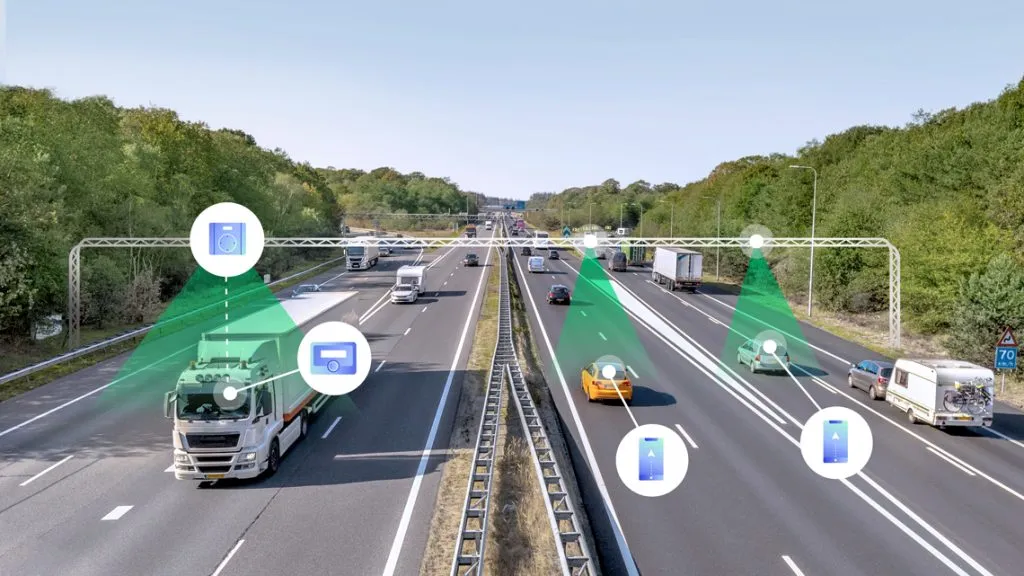
In Portugal, and other parts of Europe, toll roads are common, and there are no toll booths/check naka’s like in India, where you need to stop. You can drive through them at high speeds, and many are over the road tolls. Their fleet is equipped with Electronic Toll devices for you to be able to pay the tolls directly to Movida Rent a Car which works as a mediation with Portuguese toll entities. Rental cost for the device: 1,50€+ VAT per day with a maximum of 15,00€+ VAT per rental. A 70,00€ deposit will be required for any pending toll after the rental ends. This will be released as soon as all is settled. I got this idea after going through this very helpful post that gave me many useful tips.
Hence it’s recommended to take the toll pass from the Car Rental agency itself. This calculates the toll and you can pay at the end of the trip when you return the car.
After a week of driving from Lisbon to Porto, Aveiro, Peniche, Obidos, Sintra and back to Lisbon, the toll amount came to around 75 Euros.
Additional Driver:
You can add drivers for a nominal amount. It’s worth adding drivers when you are planning long trips. Make sure that they are older than 25, as the rates are higher for younger drivers.
There is a fee for each additional driver.
The fee is €15.00 (+ VAT) per driver. Fee applied per rental.
Offline maps. It’s a good idea to select the areas sheet you will be striving and download the maps to your device if you are using Google maps as internet connectivity may vary.
International roaming SIM. You should take an international roaming plan so that you can get SMS especially useful when you get alerts of your Credit card spends.
That’s also useful if you wish to do banking transactions.
Territorial extension: The restriction of driving the rented vehicle outside Portugal, with the exception of Spain, applies. For this you must select the Cross Border option when booking. Not applicable to the islands. A fee will be applied for this purpose, as well as additional documentation.
One-Way Hire
If your pick up and drop off locations are different, One way booking charges are applicable. These must be confirmed in advance and are subject to a fee. Fees range from 125€ to 175,00€ ( + VAT ). It is significantly more expensive to drop the car off in another location.
Driving experience:
Driving in Europe is very disciplined. And you drive on the right side of the road. So it’s important to retrain your mind and reflexes for this if you are used to driving on Indian roads.
Road markings are vital sources of information and help in making the drive safe and enjoyable.
Dr S P Mathew
A line marking on the road which is solid indicates a line that cannot be crossed especially to change lanes.
A broken Line is where you can change lanes, after giving an indicator and checking for incoming vehicles. This site is helpful for a better understanding of the various types of road markings.
Traffic signs are also very helpful. This video will surely help you.
They indicate the conditions that lie ahead and prepare the driver.
In the roads in Portugal the Traffic rules are easy to follow. Drivers usually follow the rules and most are courteous.
Controlled-Access Highways: Highways designed for high-speed traffic are often “controlled-access” meaning that all traffic flow, including ingress and egress, is regulated. The highways are designed with well-planned exits and entries, often through interchanges and ramps, to facilitate smooth and safe traffic flow, especially for high-speed vehicular traffic. A controlled-access highway is a type of highway that has been designed for high-speed vehicular traffic, with all traffic flow—ingress and egress—regulated.
Here’s a more detailed explanation:
Interchanges and Ramps: Entrances and exits to these highways are typically provided at interchanges, using “slip roads” (ramps) that allow vehicles to smoothly change speeds and merge with the highway or other roads. The design is fairly standard and I wonder why we don’t see such basic designs in Indian highways.

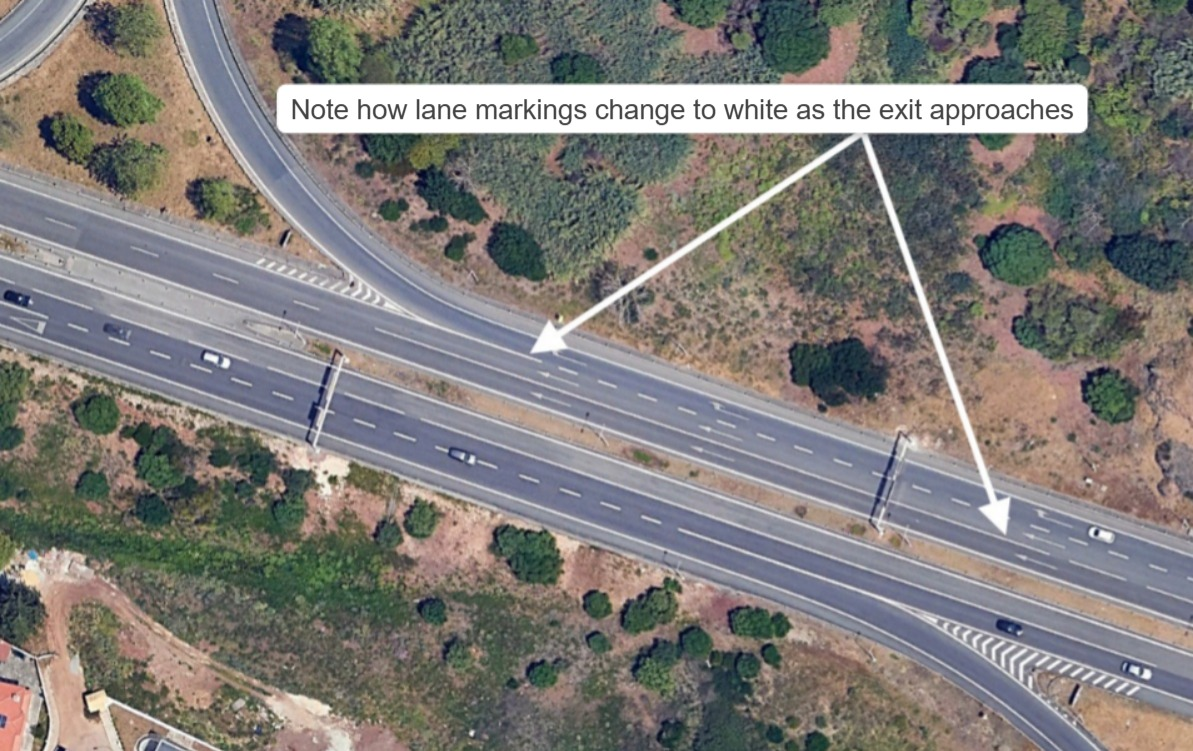
Exiting the highway: As you approach your desired exit, you need to switch to the extreme right lane well before the exit starts, [It is right sided in Europe, remember] and once the exit starts, the lane marking the exit lane changes to a solid line, as shown in the picture to prevent cars trying to exit later and cause accidents.
I really wish that such systems and more importantly the training for using it are made mandatory in India. This will go a long way to reduce accidents and also the stress associated with driving.
Dr S P Mathew
Tolls in Europe are usually automatic. You can drive past these without even realising they exist, especially if they are the On Road Toll system.
As you drive along, here are some more important tips:
Parking:
See the Black Volvo parked here on the road outside our AirBNB in Porto? That was our car parked safely on a free regular parking slot, right?

Well, we learnt a costly lesson on our first day in Portugal. This was before our car was towed from this place while we were out sightseeing at Porto! Towing charges were 140 Euros, and a fine of 70 Euros was also charged because apparently our car was parked in a utility loading area!!
We learn to always look for paid parking rather than rely on free street parking. Paid parking overnight cost us around 24 Euros.
Usually there are no signs indicating a no parking zone, and all signages are in Portuguese language. Of course we used Gemini to translate which was a big help.

Driving around, renting a car and returning it are generally smooth experiences and I am sure you will really enjoy driving around in Europe if you follow these simple guidelines.
For us the cost of the rental, the fuel, the toll, and parking etc came to around 500 Euros for 8 days.
Do let me know if you have any questions or comments. Also please share how your experience of driving was! Your comments will be helpful to other readers as well.



 Love, power and a sound mind
Leave a comment