Beyond the Battlefield: Reclaiming the Theology of Peace in a World at War
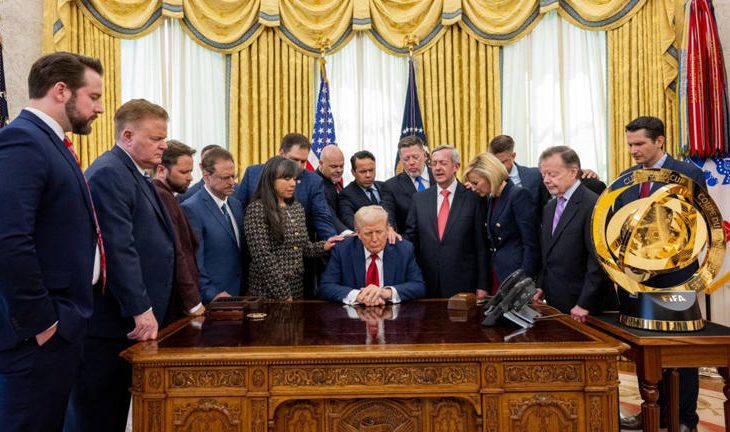
In the quiet, wood-paneled atmosphere of the Oval Office of the President of the United States of America, a scene recently unfolded in April 2026. As tensions with Iran escalate, headlines have captured images of religious leaders laying hands on the President, invoking the Book of Esther and framing a potential military conflict as a “divine mission.” One specific phrase echoed through the halls of power: “You’ve been raised up for such a time as this.”
While these words were intended to offer strength, they raise a profound and urgent question for those of us who follow the Prince of Peace: Is war truly a Christian calling? Or have we forgotten the foundational meaning of Shalom—a peace that was bought not with the blood of enemies, but with the life of a Savior?
The Rhetoric of Retribution
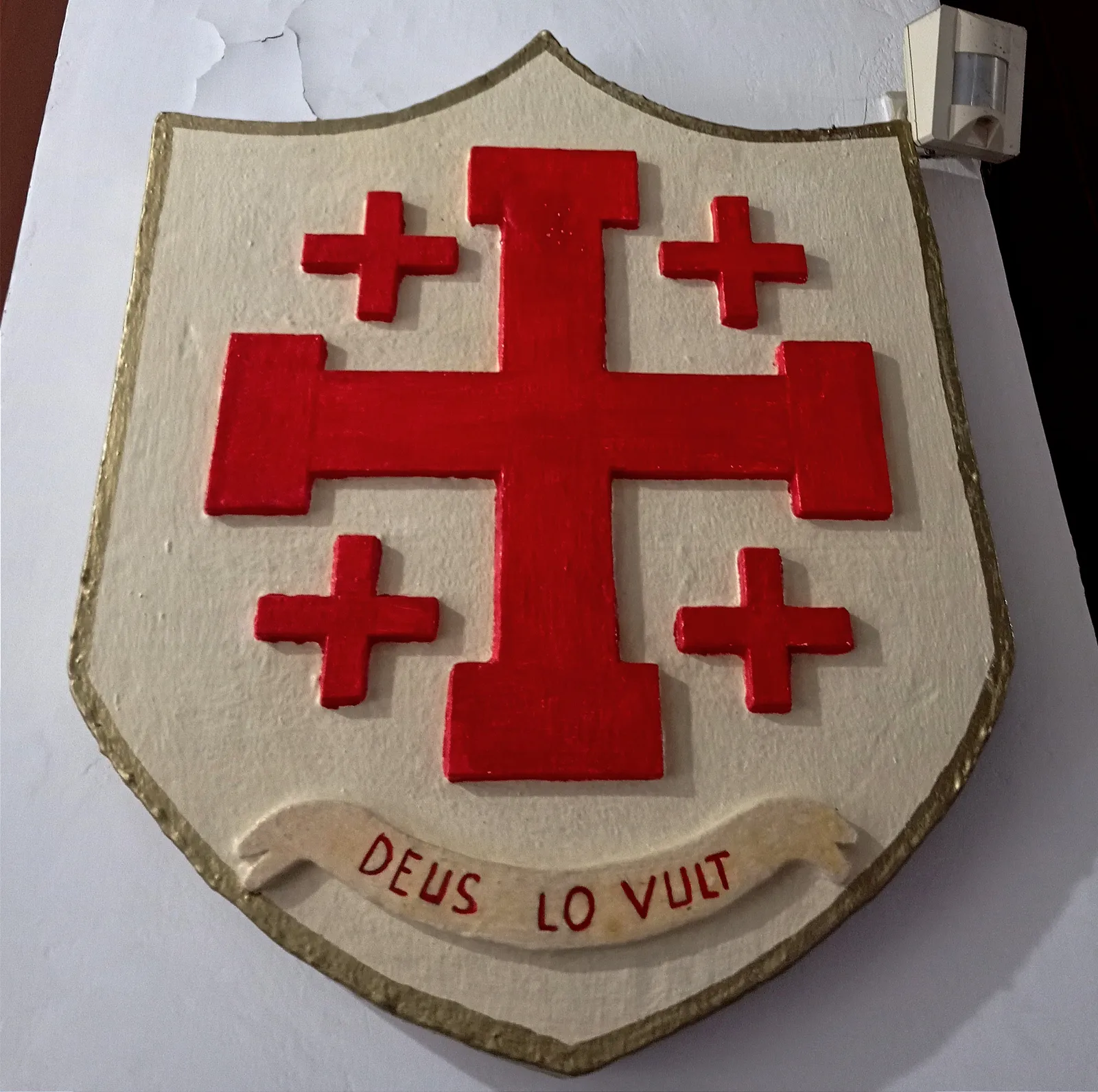
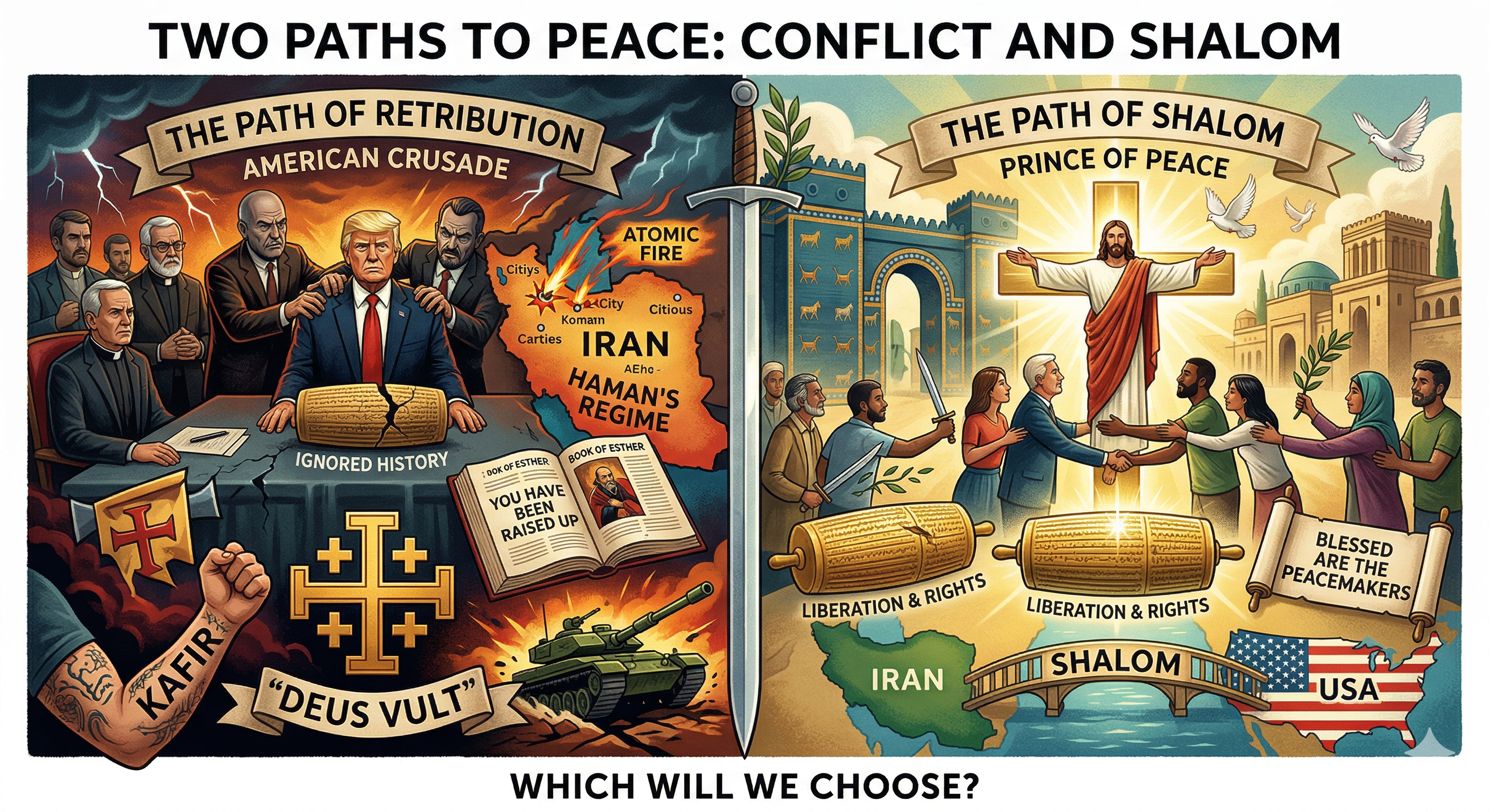
The news article in question highlights a growing trend of “Christian Nationalism” that seeks to revive the language of the Crusades. From the use of the Jerusalem Cross to the Latin motto Deus Vult (“God wills it”), there is a movement to cast geopolitical conflicts as cosmic battles between absolute good and absolute evil.
In this narrative, Iran is cast as the modern-day “Haman,” the biblical villain who sought to destroy the Jewish people. The call to action is clear: preemptive strikes, “atomic fire,” and victory through military might.
However, this perspective often overlooks a crucial historical and spiritual nuance. The same Persian history that produced Haman also produced Cyrus the Great—the leader who liberated the Jews and respected their faith.
When religious leaders [Like the Khomeinists in Iran or others across the world] reduce entire nations to ancient archetypes of villainy, we lose sight of the people living within those borders. I agree that for Muslims this is particularly challenging because the Koran explicitly asks them to do so.
However, the Bible teaches the very opposite. So, if Christians mimic such religious ideologies, they are distorting the plain teachings of Christ.
Defining Shalom: The Peace of the Cross
To understand a “better way,” we must return to the concept of Shalom. In the biblical tradition, Shalom is not merely the absence of conflict; it is the presence of wholeness, justice, and reconciliation.
My understanding of peace is rooted in the person of Jesus Christ. The heart of the Christian faith is the “substitutionary sacrifice”—the belief that Jesus took upon Himself the “punishment that brought us peace” (Isaiah 53:5).
The logic of the world says that when we are wronged, we must demand a debt. The logic of the Cross says that God Himself paid the debt of our sins so that we might be reconciled to Him. As it says in Colossians 1:20, God chose “to reconcile to himself all things… making peace through his blood, shed on the cross.”
If the Creator of the universe responded to our rebellion not with “atomic fire” but with an outstretched, nail-pierced hand, how then should we respond to our “enemies”?
The Call to Love the “Other”
There is a strategic danger in the rhetoric of “Holy War.” Many Iranians are themselves opposed to their government’s extremist ideologies. When we frame a conflict as a “Crusade” against a religion or a people, we do the work of the extremists for them. We antagonize the very people who might otherwise be allies for peace.
Christians are called to be peacemakers. Jesus was explicit in this: “Blessed are the peacemakers, for they will be called children of God” (Matthew 5:9). This isn’t a call to passivity or weakness. It is a call to the hardest work imaginable: loving those who do not love us.
In the context of Iran, this means:
- Forgiveness over Retaliation: Recognizing that cycles of violence only end when someone is brave enough to absorb the blow without striking back.
- Prayer over Propaganda: Instead of praying for the “destruction” of a nation, we are commanded to “pray for those who persecute you” (Matthew 5:44).
- Humanization over Demonization: Seeing the image of God in the Iranian citizen, the parent, and the child, rather than seeing them only through the lens of a political regime.
The Contrast: “Deus Vult” vs. “Father Forgive Them”
The article mentions the tattoo of the word Kafir (infidel). This is perhaps the starkest contrast to the way of Christ. While some might wear “infidel” as a badge of war, the Gospel teaches us that there is no “us vs. them” at the foot of the Cross. Ephesians 2:14 reminds us: “For he himself is our peace, who has made the two groups one and has destroyed the barrier, the dividing wall of hostility.”
If we believe that Christ died for the whole world—including every person in Iran, Iraq, Afghanistan, and beyond—then our primary weapon cannot be the sword. Our primary tool must be the transformative power of love and forgiveness.
Aggression and war may offer a temporary illusion of security, but they rarely produce lasting peace. Instead, they plant the seeds of the next generation’s resentment. A “better way” involves the patient, often agonizing work of diplomacy, the courage to seek common ground, and the humility to admit our own failings.
A Better Way for the Nations
This principle of Shalom isn’t just for the Middle East; it is a blueprint for global conflict. Whether in Asia, Europe, or our own neighborhoods, the path to peace is always the same: Reconciliation.
- Seek Understanding: Like the omission of Cyrus the Great in the Oval Office discussion, we often ignore the parts of history that don’t fit our “war” narrative. A better way begins with listening.
- Practice Forgiveness: Peace is possible only when we stop counting sins against one another. As Romans 12:18 urges: “If it is possible, as far as it depends on you, live at peace with everyone.”
- Invest in Humanity: Instead of pouring resources into “atomic fire,” imagine a world that invests in the flourishing of the “other.”
How? From Theology to Trenches: A Manifesto for Practical Peacemaking
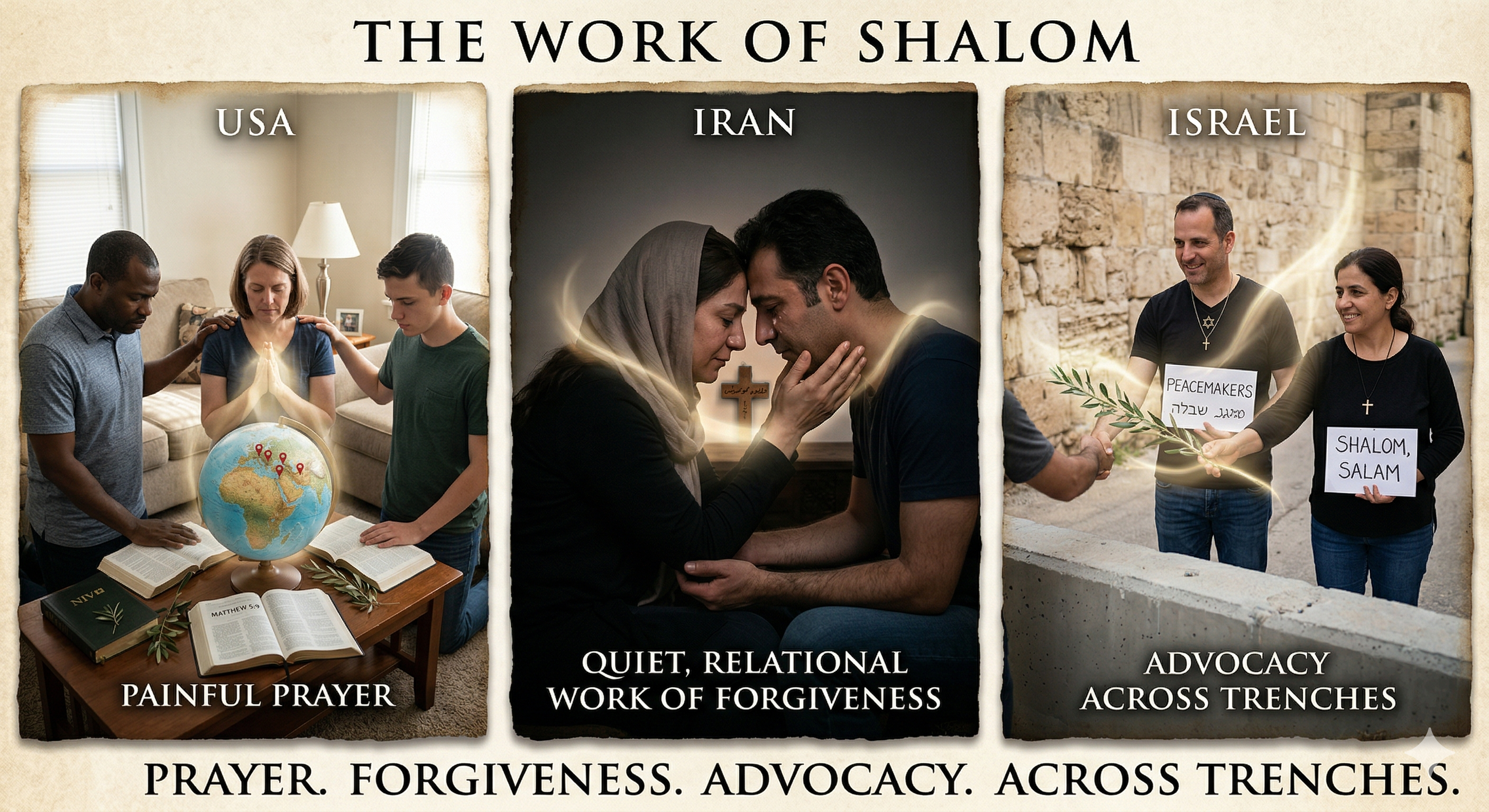
What does this look like in practice for believers living in the three nations bound by this current tension: the United States, Iran, and Israel? How do we move from praying for peace to actively manufacturing it?
The call to be a peacemaker (Matthew 5:9) is not an invitation to passivity; it is a call to a difficult, active, and often costly engagement. Here are practical ways that believers in Christ, within these specific regions, can achieve this peace.
For Believers in the United States: Reclaiming Influence and Humility
American Christians possess unique privilege and global influence. With this comes a responsibility to use it for Shalom, rather than the “Paths of Retribution.”
- 1. Challenge the Nationalistic Narrative. The greatest danger for Western Christians is conflating national security with the Kingdom of God. Believers must actively dismantle the “Holy War” rhetoric mentioned in the article. They must refuse to let the Cross be wrapped in any flag. In churches and small groups, they can practice a “theology of the ‘other,’” specifically learning about the history, culture, and deep faith of the ancient Persian and Israeli churches, rather than relying on geopolitical soundbites that demonize.
- 2. Practice Prophetic Prayer. Instead of praying only for a “divine mission” of victory, US believers should pray, by name, for the leaders of Iran, Israel, and the US, asking for wisdom and restraint (1 Timothy 2:1-2). They should pray for protection for ordinary citizens in all three nations and for the strength of underground churches in Iran and peacemaking ministries in Israel.
- 3. Use Political and Economic Leverage for Mercy. American Christians can advocate to their political leaders for diplomatic solutions and humanitarian relief that bypass regimes to help citizens. They can actively support NGOs on the ground in Israel and those working to aid Iranian refugees.
For Believers in Iran: A Secret Witness of Forgiveness
Believers in Iran are an “invisible” but powerful counter-culture, living the Gospel under intense pressure. Their primary action is a potent, spiritual resistance through forgiveness.
- 1. Forgiveness as Resistance. In a nation where the regime fosters hostility toward Israel and the West, Iranian believers can practice a different way. Their most powerful “peace” action is internally forgiving those who oppress them, refusing to internalize the regime’s hatred. When we forgive, we refuse to let the cycle of violence continue.
- 2. Modeling the Peace of Christ. The Iranian underground church, though hidden, is incredibly viral. Its growth is fueled by people seeing a community that doesn’t rely on state power or violent rhetoric, but on the quiet, sacrificial love of Christ. Believers achieve peace by modeling this counter-cultural reality in their immediate communities.
- 3. Secret Intercession for Enemies. Iranian believers have the dangerous, secret mission of praying for their government—not for its oppressive policies, but for the hearts of those in power. Their peace-making strategy is spiritual warfare, breaking the spiritual strongholds of hostility through intercessory prayer.
For Believers in Israel: Bridge-Building and Justice
Christians in Israel (both Messianic Jews and Arab Christians) live at the most volatile epicenter of this conflict. Their calling is to be tangible, living bridges.
- 1. Internal Reconciliation as a Model. The single most powerful witness in Israel is when Messianic Jews and Palestinian/Arab Christians worship together. At ONE FOR ISRAEL, this unity is daily life. Jewish and Arab believers study, serve, and fast side by side. Not because the past is simple, but because the Messiah is greater! In a region known for division, we have discovered the secret to peace: one Father, one Son, one new man in Yeshua. This internal reconciliation models a reality where “the wall of hostility” has already been destroyed (Ephesians 2:14). When the world sees this, it sees that peace isn’t just possible—it’s already here.
- 2. Advocating for Neighbors. Israeli believers, particularly those from Jewish backgrounds, can practice peacemaking by seeking justice and mercy for all their neighbors, regardless of ethnicity. They can support organizations that provide aid to marginalized communities, and they can refuse dehumanizing speech in their own communities.
- 3. International Bridge-Building. Believers in Israel can use their connections with Western churches to advocate for nuanced understanding, not blind partisanship. They can push for a “better way” that rejects the apocalyptic narrative of Haman vs. Esther in favor of the reconciliation story of Christ.
This is how Shalom is built. Not with the rhetoric of Crusades, but with the painful, quiet, relational work of prayer, forgiveness, and advocacy across the trenches of conflict. It is a supernatural task, but it is the only task that has been promised true, eternal victory.
Conclusion: For Such a Time as This
Perhaps we have been raised up for “such a time as this.” But perhaps the mission isn’t to wage a new Crusade.
I strongly believe that our mission in 2026 is to show a fractured, violent world that there is another way to live. A way that doesn’t rely on “Deus Vult” to justify destruction, but relies on “Father, forgive them” to build a future.
The most “divine mission” a Christian can undertake is not the starting of a war, but the ending of one. By reflecting the forgiveness we have received, we become the bridge-builders. We become the people who believe that because God made peace with us, we can—and must—make peace with the world.
Let us put away the emblems of the Crusades and take up the message of the Cross. That is the only victory that truly lasts.
This is the third path between the extremes of passive isolationism and aggressive militarism. It is the path of the Peacemaker.
“Blessed are the peacemakers, for they will be called children of God.” — Matthew 5:9
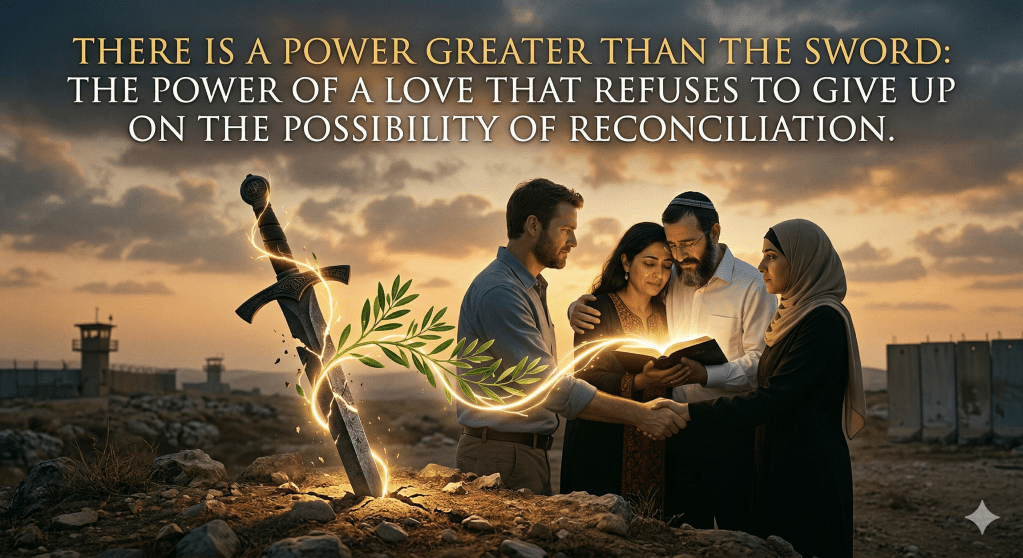
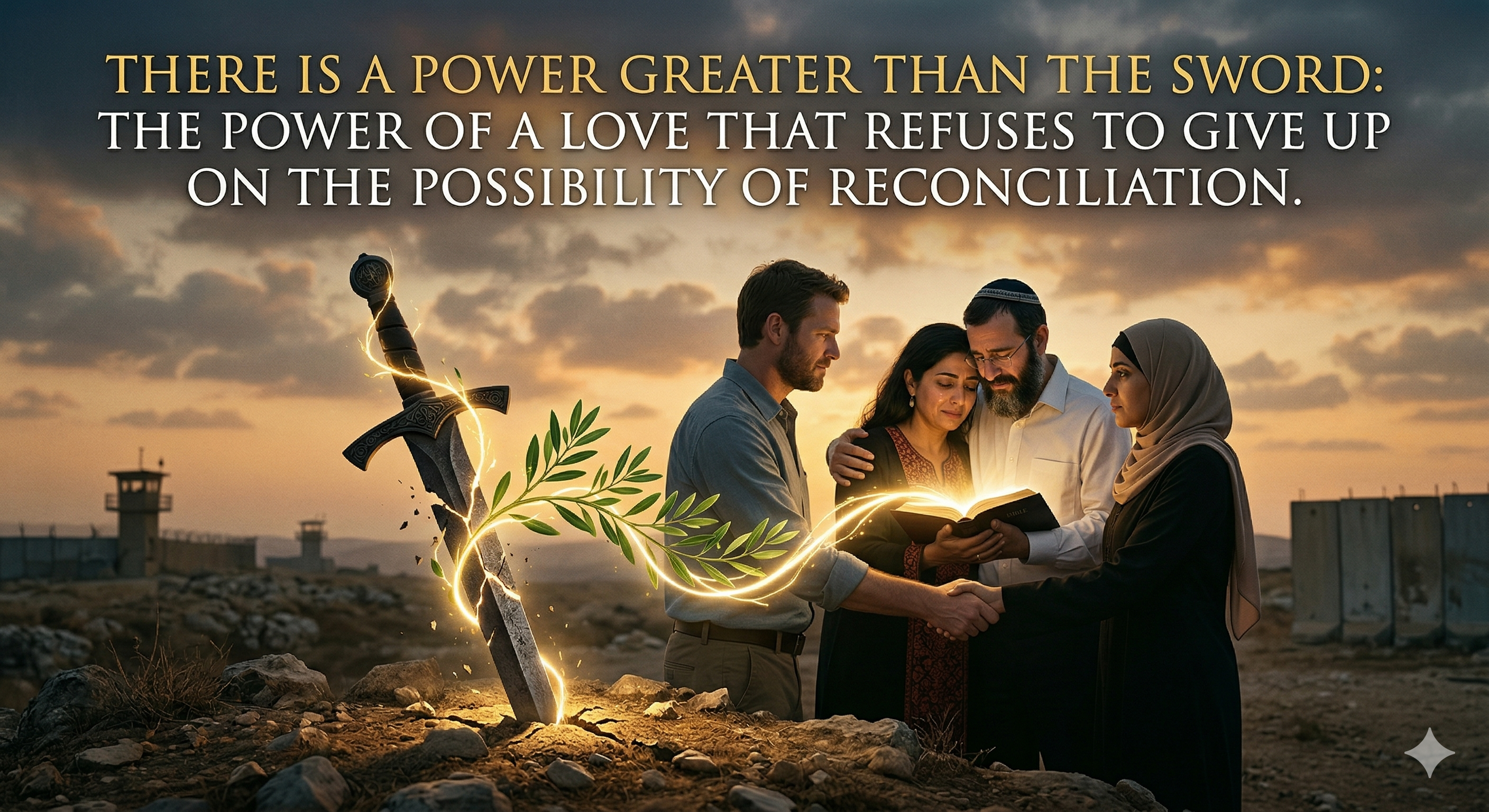
By choosing to love the people of Iran, to pray for their well-being, and to advocate for solutions that do not involve the “atomic fire” mentioned by Franklin Graham, we honor the sacrifice of Christ. We show the world that there is a power greater than the sword: the power of a love that refuses to give up on the possibility of reconciliation.
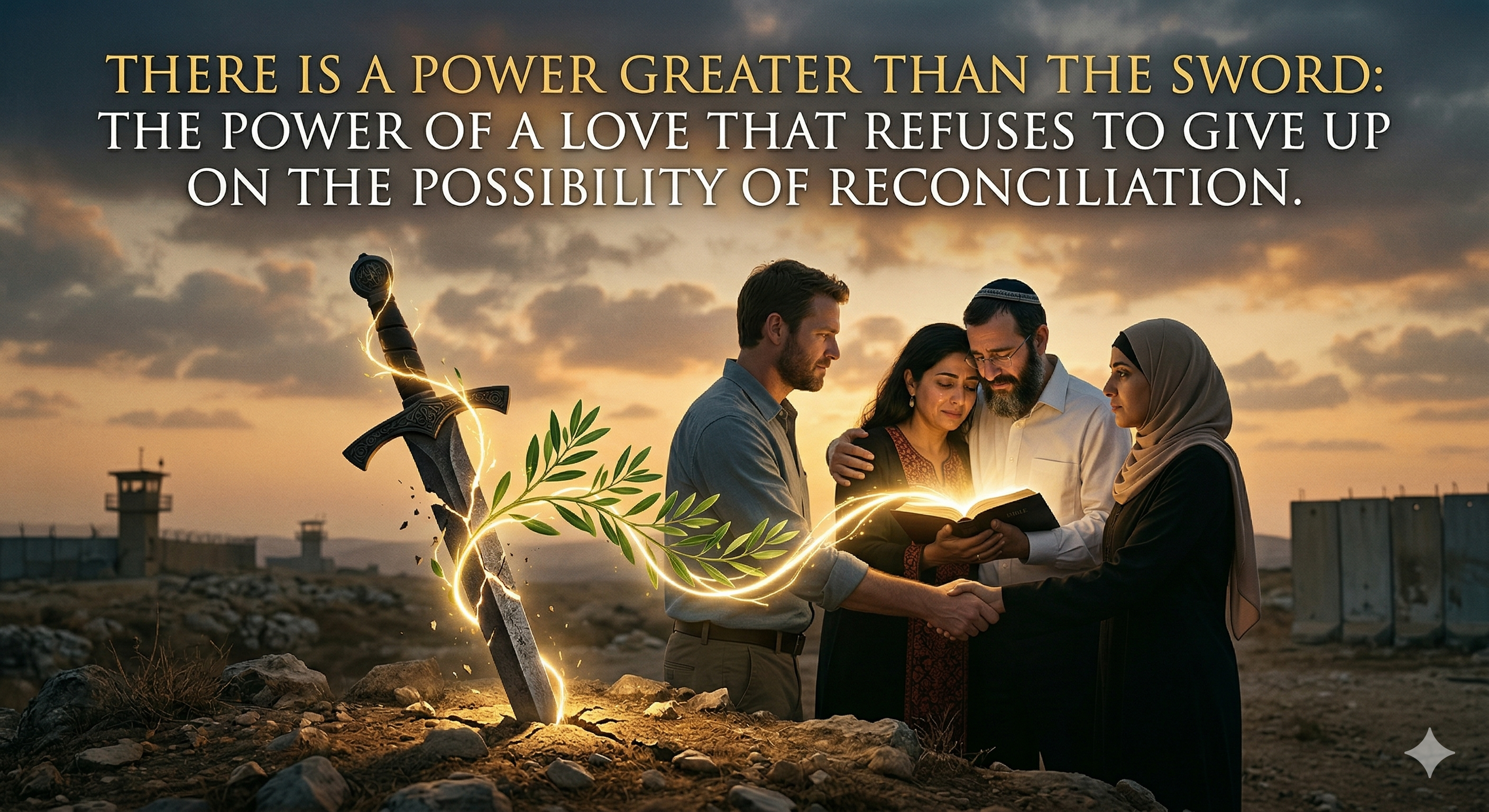
True Shalom is not found in the victory of one nation over another, but in the victory of love over hate. That is the only victory that can truly end the conflicts of our world.
May you also discover the love, peace, and power, of the resurrected Jesus, who gave everything up for you.








Leave a comment