Beyond the Bag: Reimagining Indian Agriculture Through Precision and Nature
For decades, the story of Indian agriculture has been defined by a simple, industrial equation: more land, more water, and more chemical inputs equal more yield.
As a physician, I have often drawn parallels between our human health and the health of our soil. Just as we have moved from blunt-force medical interventions toward “Whole Person Care”—a holistic approach that considers the patient’s lifestyle, environment, and biological uniqueness—our agricultural systems are undergoing a similar, much-needed evolution.
Recent policy shifts from the Government of India reveal a sophisticated, dual-track strategy to address the dual crises of ecological degradation and farm income volatility.

We are witnessing a transition away from the indiscriminate overuse of synthetic chemicals toward a model defined by precision technology and nature-positive practices. For the modern farmer and the health-conscious consumer, understanding this shift is essential.
The Technological Leap: Nano Fertilizers and Precision Nutrition
To understand why the government is promoting Nano Fertilizers, we must first recognize the inefficiencies of our current system. When a farmer applies traditional urea, a significant portion of the nitrogen is lost to the atmosphere as gas, leached into groundwater, or washed away by runoff. It is, in medical terms, akin to delivering a high-dosage medication that the body cannot absorb, leading to side effects rather than healing.
Nano fertilizers, such as Nano Urea and Nano DAP, represent a paradigm shift toward precision. Because these fertilizers are engineered at the nanoscale, they possess an incredibly high surface-area-to-volume ratio.
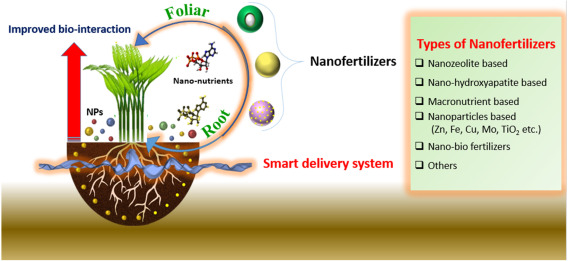
When applied as a foliar spray (sprayed directly onto the leaves), the plant absorbs these nutrients far more efficiently than it can through traditional root uptake from the soil.
From a management perspective, this is a game-changer. By reducing the volume of chemical application, we lower the physical burden on our soil and minimize the environmental footprint. It is the agricultural equivalent of switching from oral medication to targeted, localized therapy. This technology allows India to maintain the high yields necessary to feed our growing population while curbing the massive waste associated with bulk fertilizer logistics.
The Ecological Foundation: Embracing Natural Farming
If Nano Fertilizers provide the “targeted intervention” for high-output agriculture, the National Mission on Natural Farming (NMNF) represents our “preventative care” strategy. With a target to bring 3.25 million hectares under natural farming by 2031, the government is signaling a commitment to restoring the fundamental biological integrity of our soil.
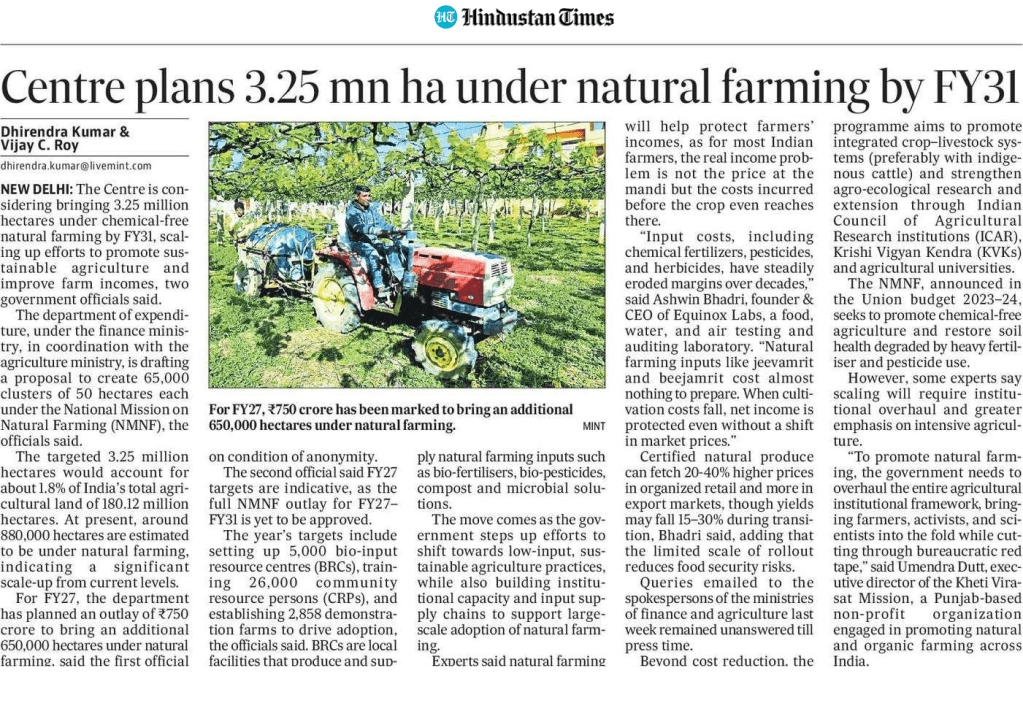
HT 5th May 2026
Natural farming is not merely “organic farming”—it is a methodology that seeks to eliminate the need for purchased inputs entirely. By utilizing farm-based preparations like Jeevamrit—a potent concoction of cow dung, urine, jaggery, and local soil—farmers can reintroduce essential microbial life to degraded fields.
The rationale here is biological: soil is not a dead medium that holds plants; it is a living ecosystem. When we over-rely on synthetic nitrogen, phosphorus, and potassium (NPK), we effectively put the soil’s natural nutrient-cycling systems to sleep. Natural farming reawakens the soil microbiome. It fosters complex relationships between fungi, bacteria, and roots that allow plants to access nutrients that were previously “locked” in the soil. For the farmer, this means a drastic reduction in input costs—often the primary cause of farm debt—and a crop that is inherently more resilient to pests and climate fluctuations.
The Convergence: A Holistic Path Forward
One might ask: are these two approaches—high-tech Nano inputs and low-tech natural farming—contradictory?
In my view, as both a medical professional and an advocate for systemic health, they are complementary. We are moving toward a tiered agricultural future.
- For Intensive Production: In areas where yield must remain exceptionally high to maintain food security, Nano technology provides a path to reduce chemical dependency and runoff. It is a pragmatic, immediate solution to improve efficiency.
- For Ecological Restoration: In regions where soil health has been severely compromised, natural farming provides the long-term solution to regenerate the earth, improve water retention, and enhance the nutritional density of our food.
The government’s strategy is essentially one of “diversified risk.” We cannot rely solely on chemical-intensive industrial models, nor can we transition the entire country to natural farming overnight without facing potential food security challenges. Instead, the current roadmap acknowledges that different fields require different “prescriptions.”
What This Means for Us
As we look toward the future of India’s landscape, the objective is clear: Healthier Soil and a Happier Farmer.
For the executive, the student, or the policy enthusiast, this transition matters because our health is inextricably linked to the soil from which our food grows.
As a medical director, my focus on “Whole Person Care” is not limited to the clinic walls; it extends to the health of the food system that sustains us. When we support policies that prioritize soil health, we are effectively investing in the preventative healthcare of the entire nation.
The path forward requires institutional overhauls—from the Krishi Vigyan Kendras (KVKs) to agricultural universities—to help farmers navigate this transition. It requires a willingness to unlearn the “more is better” mentality that dominated the Green Revolution and replace it with a “precise and natural” philosophy.
The goal of 3.25 million hectares under natural farming by 2031 is ambitious, but it is an essential step in securing a sustainable future. As we embrace these changes, we aren’t just farming crops; we are cultivating a legacy of resilience, both for our land and for the generations who will inhabit it. Israel has proved this can be done, and global best practices will surely help.
Water stewardship is also very important.
Whether through the lens of a doctor or a farmer, the conclusion remains the same: the most effective solutions are rarely the most extreme. They are the ones that honor the complexity of the living systems they seek to improve.






Leave a Reply