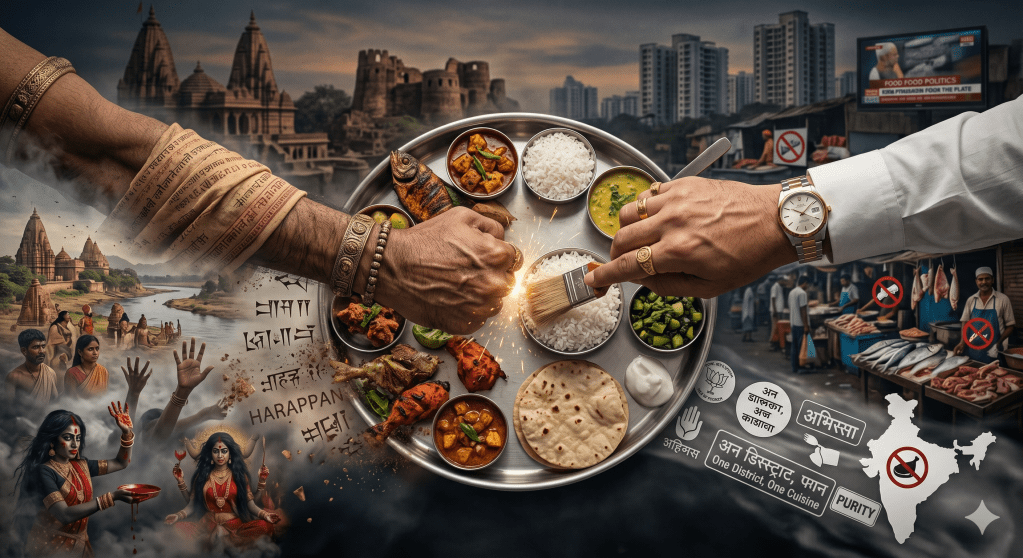
The Cultural Anatomy of the Indian Plate: Why Food is More Than Fuel
In our daily clinical practice, we often analyze food through a purely metabolic lens. We talk about macronutrients, glycemic indices, and caloric density. But outside the clinic walls, what sits on a plate carries a far heavier weight. Food is a living archive of history, identity, dynamic geography, and power structures.
A recent piece by mythologist and author Devdutt Pattanaik in The Times of India (“When History Begins Disappearing From The Plate,” June 4, 2026) highlights a significant shift in India’s public culture: the systematic weaponization of dietary choices, specifically the aggressive promotion of a standardized “satvik” vegetarianism as the sole metric for civic purity and social standing.
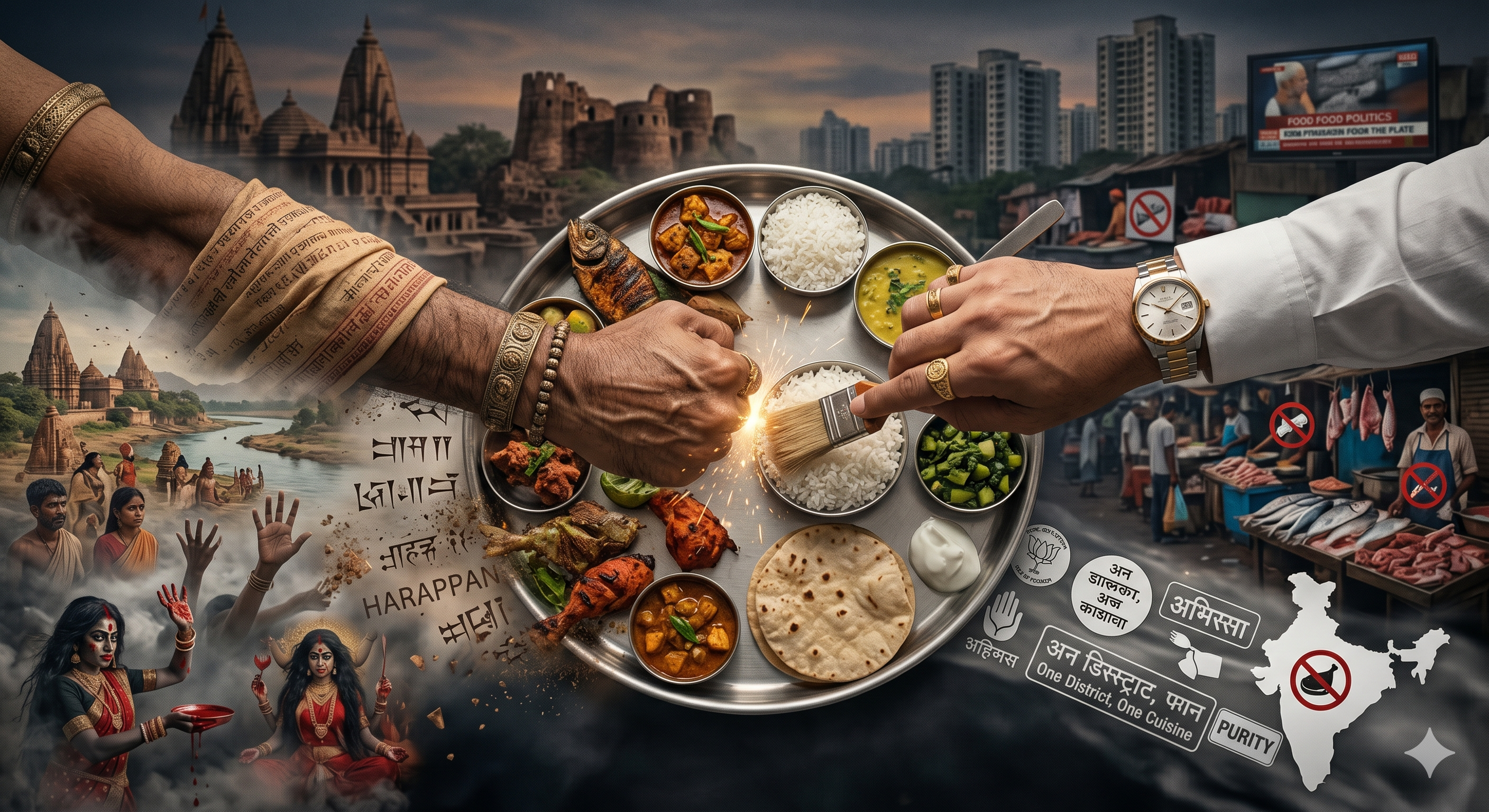
As health professionals and citizens, understanding the intersection of culture, history, and dietary diversity is essential. Let’s break down the core arguments of Pattanaik’s analysis and what they reveal about the changing landscape of our public spaces.
The Erasure of Historical Reality
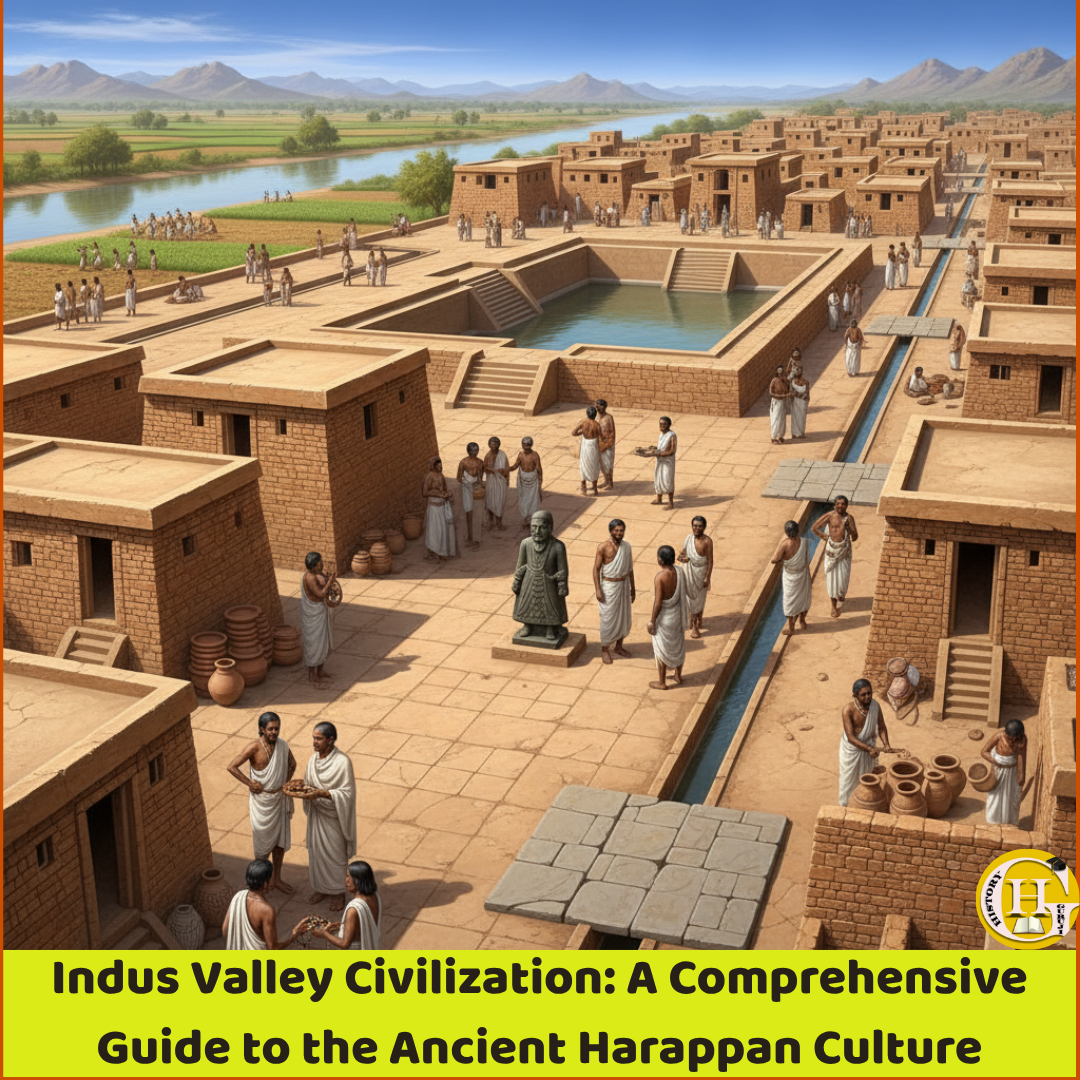
One of the most striking points raised is the literal rewriting of history via the menu card. Pattanaik notes that during a planned Harappan food festival at the National Museum a few years ago, organizers were quietly instructed to omit meat dishes. This instruction ignores extensive archaeological evidence proving that the Harappan diet routinely included beef, pork, poultry, and fish.
When official cultural lists—such as Uttar Pradesh’s recent “One District, One Cuisine” initiative—entirely exclude meat dishes in regions where a large portion of the population (including a vast number of Hindus) consumes meat, it represents a deliberate rewriting of public culture.
The Mechanics of “Spatial” Restriction
We are witnessing a shift from personal choice to spatial imposition. In metropolitan hubs like Mumbai, there are escalating demands to banish traditional fish vendors from streets. Concurrently, policies across various states aim to prohibit meat sales within a 15-kilometer radius of temples. Given the sheer density of shrines across urban and rural India, such regulations effectively mandate localized dietary restrictions on entire communities.
Pattanaik draws a direct structural parallel between this movement and international dietary enforcement:
“This is the imposition of a belief system, no different in structure from how Islamic countries impose halal or how orthodox Jewish communities impose kosher. Food is one of the most powerful tools to establish identity, and the Sanatani Hindu lobby is now doing through ‘satvik’ what others have done through their dietary codes.”
The Three Distortions of Modern Dietary Politics
The article highlights three critical historical and sociological truths that the aggressive vegetarian lobby frequently overlooks:
1. The Caste Dynamic and “Sanskritisation”
Sociologist M.N. Srinivas famously coined the term Sanskritisation to describe how lower-caste groups seeking upward social mobility historically adopted the dietary habits, rituals, and lifestyles of upper castes—prominently including the renunciation of meat. By trying to equate a vegetarian diet directly with moral superiority and “kindness,” the counter-narrative automatically tries to paint meat-eating communities (including many Dalits, Adivasis, Christians, and Muslims) as inherently less compassionate, justifying their marginalization.
The world recognises compassion as bearing no recognition to dietary choices at all. Jesus Christ himself made it very clear in his teachings over 2000 years ago, that what he eats is not what pollutes a man, and yet in India there are some who seem not to have understood this very basic fact.
2. Separating Ahimsa (Non-Violence) from Aparigraha (Non-Possession)
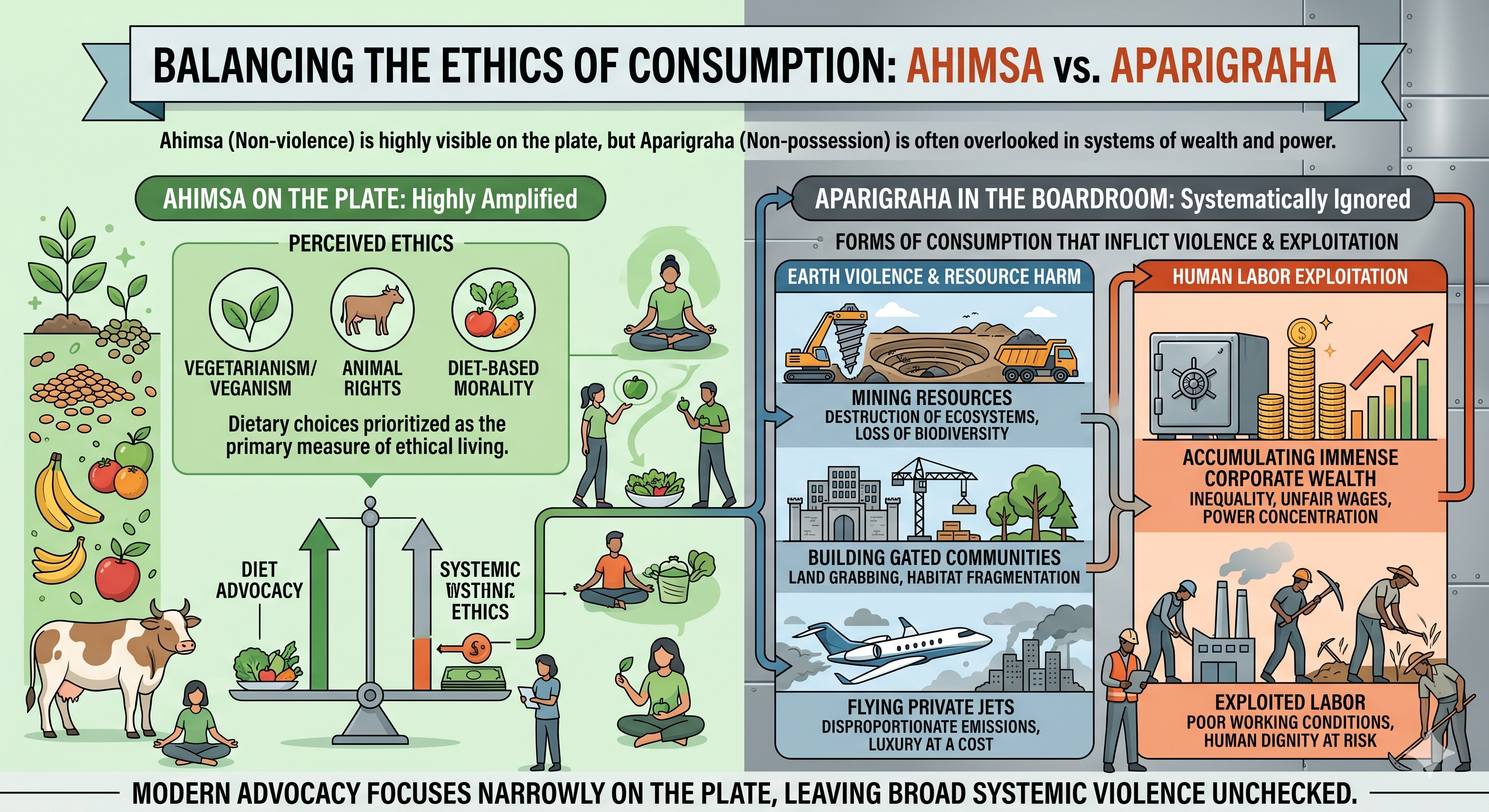
In Jain philosophy, Ahimsa (non-injury) cannot be decoupled from Aparigraha (non-possessive behavior). True adherence means recognizing that all forms of consumption—building gated communities, mining resources, flying private jets, and accumulating immense corporate wealth—inflict violence on the earth and exploit human labor. Modern advocacy, however, heavily amplifies Ahimsa on the plate while largely ignoring Aparigraha in the boardroom.
3. The Forgotten Tantric Tradition
Historically, local deities and fierce goddesses across India received blood offerings, a practice tied to temporal and military power. Over centuries, under pressure from mercantile communities and monastic reforms, these practices were systematically sanitized. The diverse, pluralistic rituals of the subcontinent were flattened into a singular, homogenized definition of what constitutes proper devotion.
A Prescriptive Takeaway
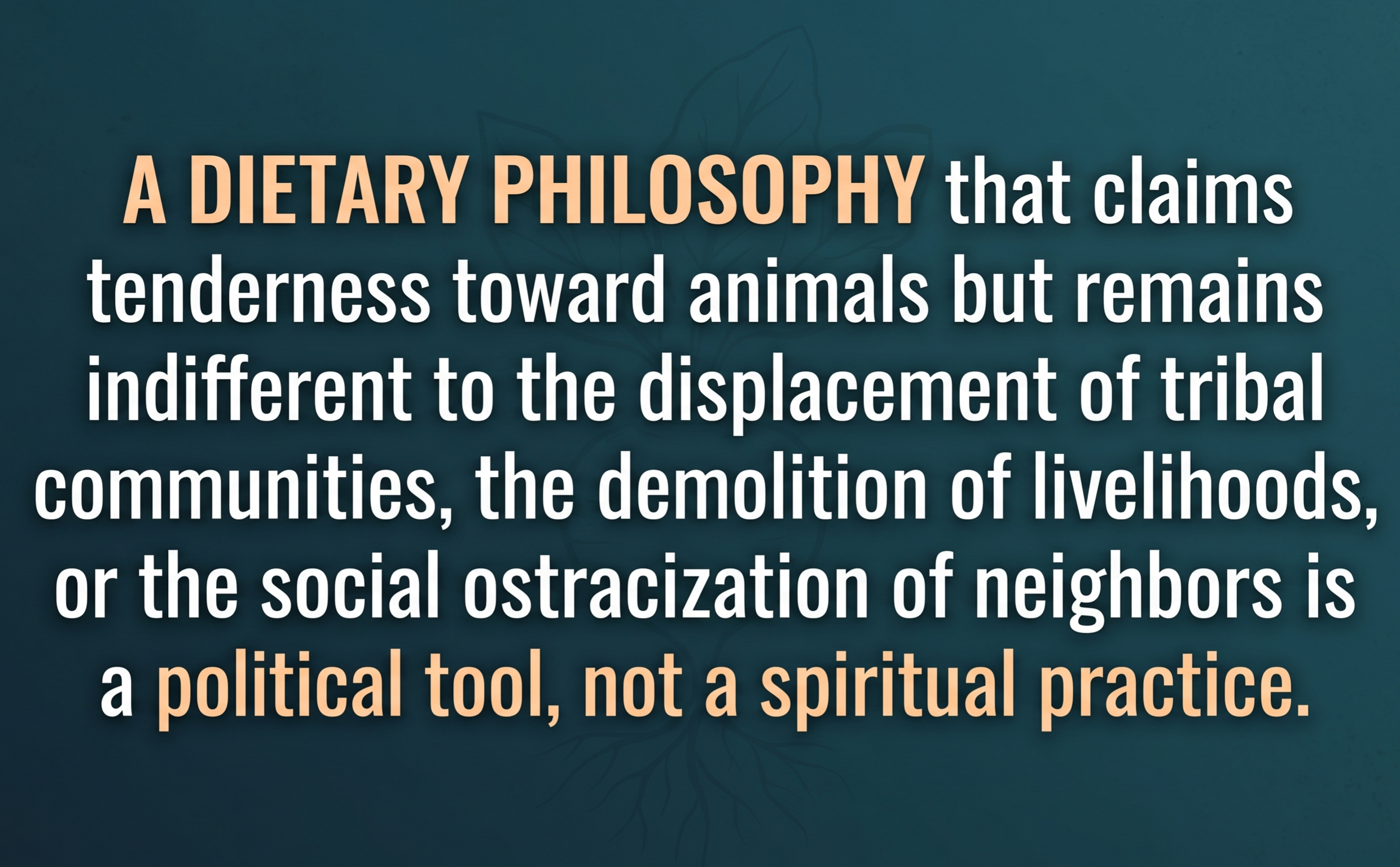
Pattanaik’s critique reminds us that true compassion cannot be selective. A dietary philosophy that claims tenderness toward animals but remains indifferent to the displacement of tribal communities, the demolition of livelihoods, or the social ostracization of neighbors is a political tool, not a spiritual practice.
India’s greatest strength has always been its pluralism—biologically, culturally, and structurally. Homogenizing the Indian plate does not make society purer; it simply makes it less inclusive. To understand health, community welfare, and public life in India, we must respect the diversity of what people eat and defend their right to line their plates with their own history.
What are your thoughts on how changing food policies impact urban life and community spaces? Let’s discuss in the comments below.






Leave a Reply