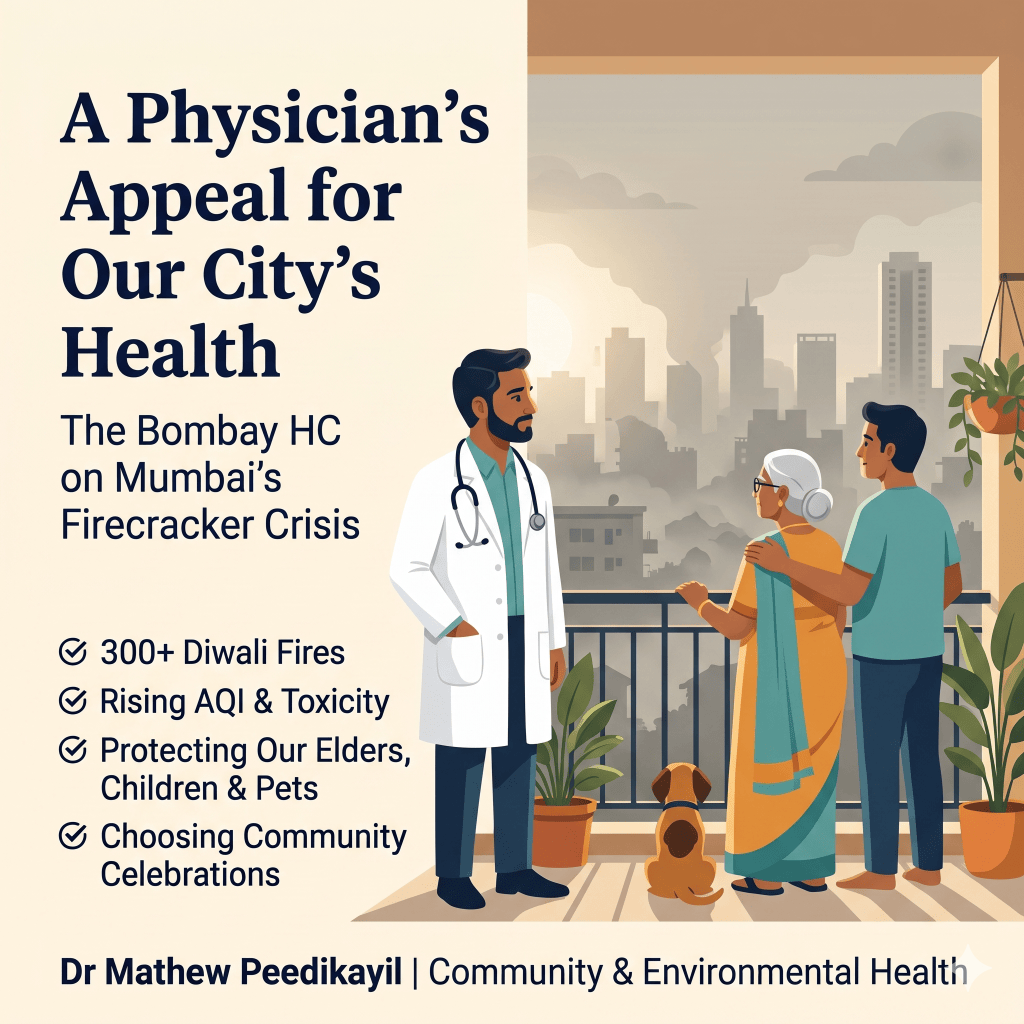
Every year, as the festive season arrives, our hearts fill with joy. The lights, the gatherings, the laughter, and the shared meals—these are the beautiful threads that bind us together as a community. But in recent years, a shadow has fallen over these celebrations. As a physician who has dedicated decades to safeguarding the well-being of families in Mumbai, I have watched with growing concern the physical and environmental toll that our festivities now take on our city.
Recently, the Bombay High Court took suo motu notice of the alarming aftermath of this year’s Diwali in November 2026. Despite the best, tireless efforts of our civic and police personnel, our city faced over 300 fires, heavily spiked air toxicity (with AQI reportedly touching a hazardous 400 in some areas), and unrelenting noise pollution that lasted well into the early hours of the morning.
Justices Girish Kulkarni and Neela Gokhale observed that “the health of others is our main consideration” and suggested that we may have no alternative but to implement a larger ban on individual firecrackers, transitioning instead to regulated “community firecrackers” on designated grounds.
As your doctor, and as a fellow citizen who loves this vibrant city, I believe we must stop, listen, and change. The court’s words are not just a legal warning; they are a compassionate, urgent plea for the survival and health of our community.
The Invisible Toll: Why Our Current Festive Habits are Hazardous to Health
When we think of Diwali, we want to remember the light. But the reality on the ground—and in our lungs—tells a different story. “Civic sense up in smoke” was the sobering headline cited by the High Court, and in the clinics and hospitals across Mumbai, we feel the weight of that smoke every day.
1. High AQI and Vulnerable Lungs
An Air Quality Index (AQI) of 400 is not just a statistic—it is an environmental crisis.
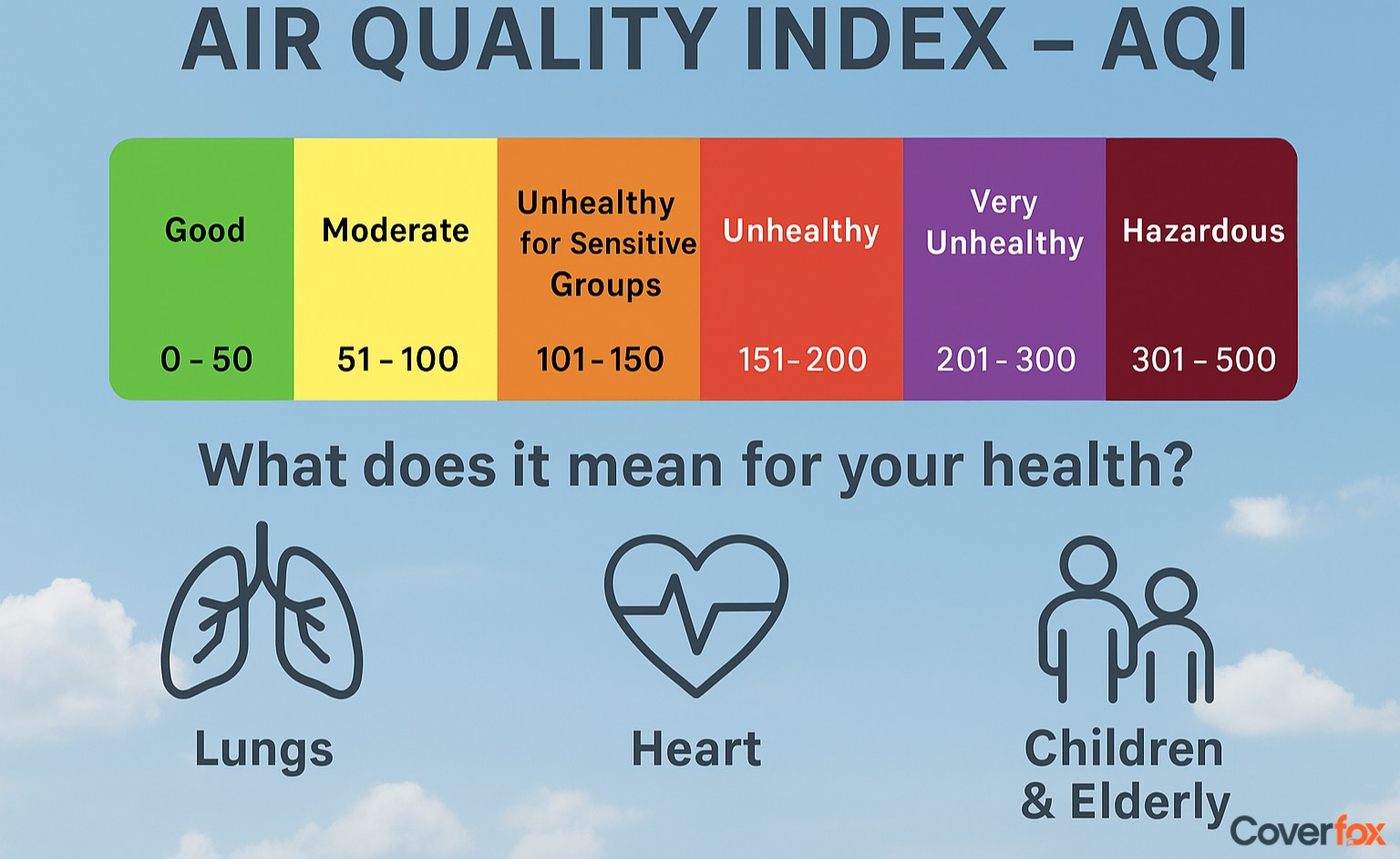
The fine particulate matter ($PM_{2.5}$) and toxic chemical byproducts released by firecrackers bypass our natural nasal filters, traveling deep into the lungs. For our elders, infants, and those with pre-existing conditions like asthma, bronchitis, or COPD, this is not just uncomfortable; it is life-threatening. “Everyone cannot afford to have air purifiers at home,” the Bench wisely noted. Clean air should not be a luxury; it is a fundamental human right.
2. The Mental and Physical Impact of Noise
Continuous noise that shatters the night and extends until 3:00 AM severely disrupts sleep, which is critical for natural healing, immune function, and cardiovascular health. High-decibel explosions trigger an immediate stress response, flooding the body with cortisol and adrenaline. This can be dangerous for cardiac patients, and it causes immense distress to newborns, pregnant women, and our defenseless pets and local wildlife, who lack the understanding of what is happening around them.
3. A Legacy of Fire and Injury
With more than 300 fires reported in a single holiday period, the threat to life and property is undeniable.
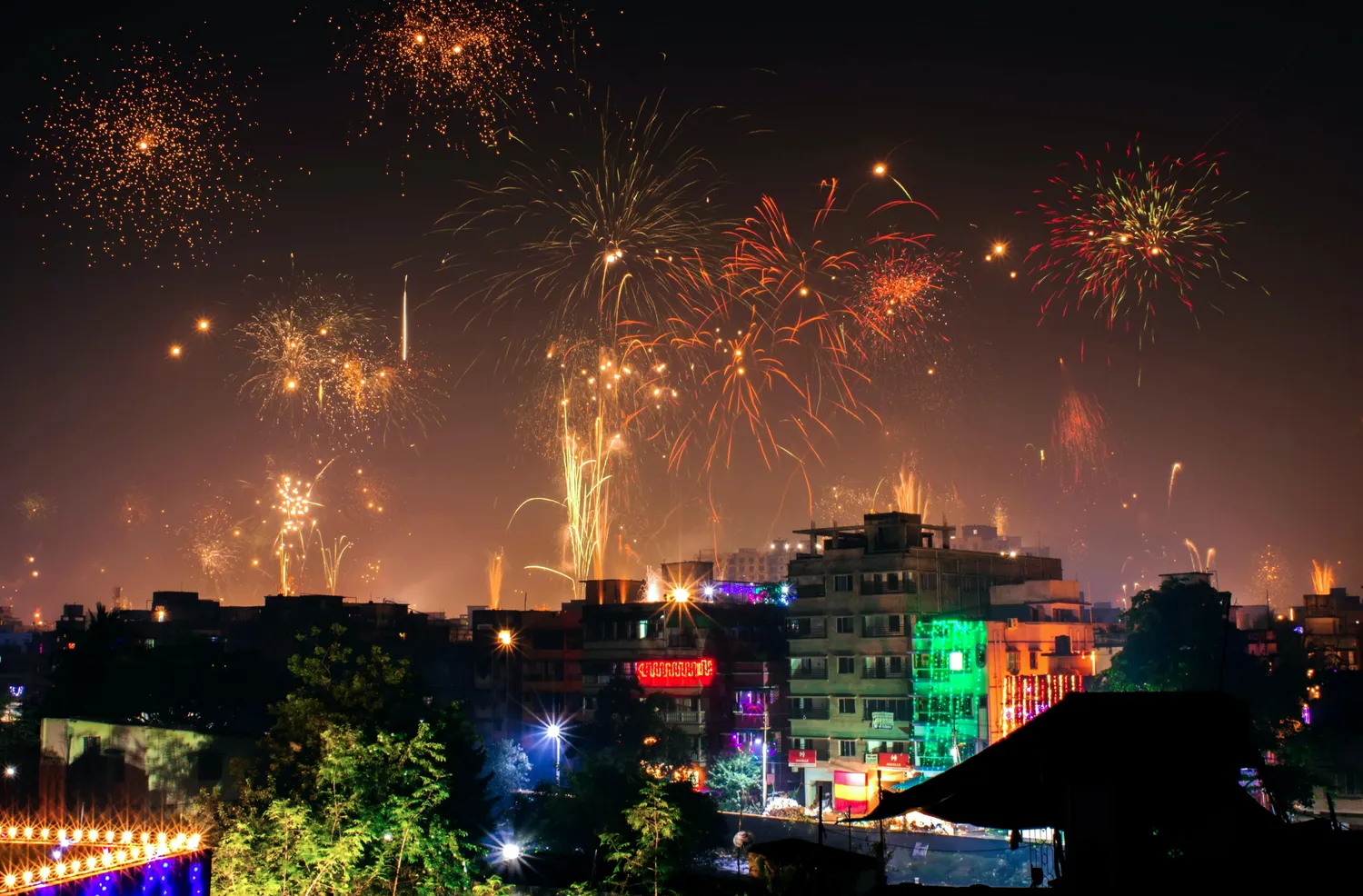
Our brave firefighters and police force work under immense pressure, yet even their best efforts cannot completely mitigate the risks when explosive materials are used indiscriminately in crowded residential areas.
Moving Toward a Compassionate, Safer Solution: “Community Firecrackers”
Traditions must evolve when they begin to threaten the very lives they are meant to celebrate. Just as we have found ways to adapt other practices for public safety, we must embrace a new model for our festivals.
The High Court’s suggestion to allow only “community firecrackers” on permissible designated grounds for limited periods—drawing inspiration from models in other global cities—is a highly sensible, proactive step.
- Focusing on Unity, Not Individual Disruption: Imagine gathering with your neighbors at a local designated ground, watching a controlled, timed, and perhaps safer community display, and then returning to the quiet, safe comfort of your homes. This keeps the festive spirit alive while keeping our residential lanes quiet, safe, and smoke-free.
- Protecting the Rights of Others: Court-appointed amicus curiae and legal advocates emphasized during the hearing that the “right to health” must have supremacy over commercial interests. True celebration should never come at the expense of our neighbors’ ability to breathe.
A Call to My Fellow Mumbaikars
My dear citizens, let us not wait for the law to impose “drastic orders.” Let our change of heart come from a place of respect, empathy, and community responsibility.
The High Court stated, “It is purely in the interest of society… if we don’t take timely steps, what will be the effect on the city is left only to imagination.”
Let us prove that we care. This year, and in the festive seasons to come, let us make the conscious choice to:
- Pledge a personal limit or complete stop to the use of private, noisy, and polluting firecrackers.
- Support community-based, eco-friendly celebrations that keep the joy but lose the hazardous smoke and noise.
- Protect our vulnerable ones—the elderly, our children, our patients, and our beloved animals—who rely on us to keep their environments safe and peaceful.
Let us reclaim the true spirit of our festivals: a celebration of light, of life, and of our shared humanity.
Stay alert, stay compassionate, and let’s keep our Mumbai safe.
Dr. Mathew Peedikayil is an Internal Medicine Physician and Medical Director at Ashok One Hospital in Dahisar East, Mumbai, dedicated to whole-person medical care, public safety, and community health education.



Leave a Reply