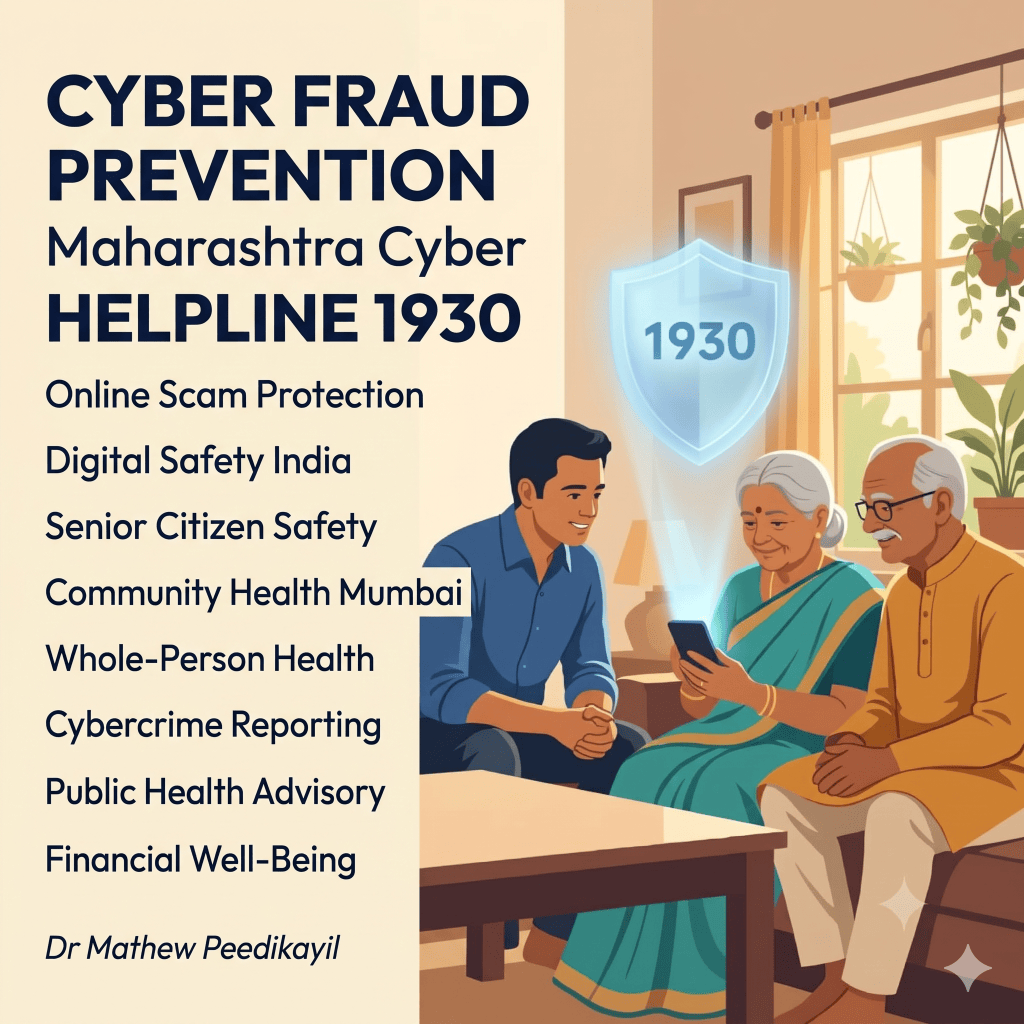
In my decades of clinical practice in Mumbai, I have always believed that true healthcare extends far beyond the walls of a hospital. Whole-person well-being means safeguarding every aspect of a person’s life—not only their physical health, but also their peace of mind, financial security, and emotional resilience.
Today, one of the most pressing threats to the peace of mind of families and senior citizens across our community is online financial fraud. The distress caused by losing hard-earned savings to a deceptive phone call or a fraudulent link can take a heavy toll on an individual’s mental and physical health.
To help protect citizens from these evolving threats, Maharashtra Cyber (Government of Maharashtra) has released an important public awareness advisory. I am sharing their essential guidance here so that we can all remain vigilant and protect one another.
Understanding the Threat: Awareness is Our Best Prevention
Just as preventive medicine stops an illness before it takes root, digital awareness is our strongest defense against cybercrime. Fraudsters today use sophisticated psychological tactics—often creating a false sense of urgency, fear, or reward—to catch honest, hardworking people off guard.
In their official awareness campaign, Maharashtra Cyber urges every citizen to take a moment to watch their educational video carefully. Seeing firsthand how online scams are executed makes it much easier to recognize the warning signs before any harm is done.
Compassionate, Practical Steps to Keep Yourself and Your Elders Safe
Protecting yourself online does not require technical expertise—it simply requires mindful habits and a calm pause before acting:
- Guard Your Private Credentials: Please remember that no legitimate bank, government official, or healthcare institution will ever ask for your OTP, ATM PIN, CVV, or passwords over a phone call, text message, or email.
- Pause Before Clicking: Be cautious of unsolicited links sent via WhatsApp or SMS—especially those claiming urgent KYC updates, unpaid electricity bills, courier deliveries, or unexpected rewards. When in doubt, do not click.
- Resist Urgency and Fear: Scammers often impersonate law enforcement or bank officials to induce panic. If you receive an intimidating call, take a deep breath, disconnect the call, and verify the claim independently through official channels.
- Support Our Senior Citizens: Elders in our families are frequently targeted because of their trusting nature. Take time to sit down with your parents and older relatives to gently walk them through these precautions without judgment.
Immediate Action: What to Do If Cyber Fraud Occurs
If you or someone in your circle falls victim to an online scam or cyber offense, please do not hesitate out of embarrassment. Cybercriminals are highly trained deceivers, and reporting the incident immediately gives authorities the best chance to freeze the stolen funds:
- Call the National Cyber Crime Helpline: Dial 1930 right away.
- File an Online Complaint: Submit a formal report on the official National Cyber Crime Reporting Portal at www.cybercrime.gov.in.
Follow Official Maharashtra Cyber Channels for Verified Updates
Staying informed through trusted government sources is key to long-term digital safety. You can follow the official social media handles of Maharashtra Cyber for ongoing alerts and educational resources:
- Instagram: @mahacyber
- Facebook: MahaCyber
- X (Twitter): @MahaCyber1
- YouTube: @maharashtracyber
Let us look out for one another in the digital space just as we do in our neighborhoods. Please share this advisory with your family, colleagues, and community networks.
Stay alert, stay safe.
Dr. Mathew Peedikayil is an Internal Medicine Physician and Medical Director at Ashok One Hospital in Dahisar East, Mumbai, dedicated to whole-person medical care and community health education.





Leave a Reply